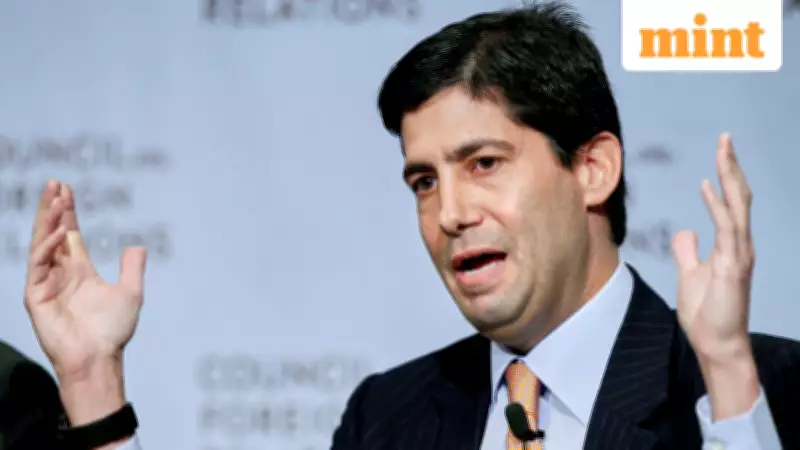
In a significant development for global economic governance, US President Donald Trump officially nominated his longtime ally Kevin Warsh on Friday to succeed Jerome Powell as the Chairman of the Federal Reserve. Powell's current tenure at the helm of the central bank is scheduled to conclude in May 2026, setting the stage for a potential leadership transition.
The Nomination and Immediate Political Context
President Trump's selection of Kevin Warsh marks the culmination of an extensive, month-long search process to identify a successor to the incumbent Fed Chair. This move follows years of sustained, public criticism from Trump directed at the Federal Reserve under Powell's leadership, a pattern that began almost immediately after Powell assumed the role in 2018.
However, Warsh cannot simply assume the powerful position of Fed Chair. His appointment is contingent upon receiving formal approval from the United States Senate through its confirmation process. Early indications suggest this path may be fraught with political difficulty and procedural challenges.

Potential Roadblocks in the Senate
According to an NBC News report, President Trump's persistent campaign pressuring the Federal Reserve to implement sharp interest rate cuts has reportedly alienated several key senators. In a closely divided Senate, Warsh will need the backing of these very lawmakers for a successful confirmation, potentially complicating the entire process from the outset.
Further complicating matters, Republican Senator Thom Tillis has signaled his intention to block any and all Federal Reserve nominees until the Justice Department completes an ongoing investigation. This probe was initiated earlier this year after the Department issued grand jury subpoenas to the central bank, launching a criminal investigation into Chairman Jerome Powell.
The Investigation and Broader Power Struggle
The investigation centers on Powell's testimony before the Senate Banking Committee in June 2025 and allegations concerning the renovation costs of Federal Reserve office buildings. President Trump has accused Powell of overseeing "fraudulent" cost overruns, claiming expenses ballooned to $2.5 billion from an originally planned $1.9 billion in 2019. The Justice Department states the investigation is examining potential "abuse of taxpayer dollars."
Powell, for his part, has countered that the criminal probe stems from the Federal Reserve's fundamental mandate to set interest rates based on its independent assessment of the public's best interest, rather than aligning monetary policy with the preferences of the sitting president.
What Happens Next for the Federal Reserve?
If confirmed by the Senate, Kevin Warsh would officially succeed Jerome Powell as the chief of the US Federal Reserve. Historically, Fed chairs who are removed from their leadership position have resigned from the Board of Governors entirely. However, this precedent may not hold in the current scenario.
NBC News notes that Powell still has two years remaining in his term as a Fed Governor. He could potentially choose to serve out this term, positioning himself as a bulwark against perceived efforts by the Trump administration to compromise the central bank's cherished independence.
This power dynamic is further underscored by an ongoing Supreme Court review of President Trump's move to unseat another Fed Governor, Lisa Cook. The outcome of this case could ultimately define the legal limits of a president's authority over members of the Federal Reserve Board.
Understanding the Fed's Decision-Making
It is crucial to clarify that the Fed Chair does not unilaterally decide interest rates. Jerome Powell is one of twelve voting members on the Federal Open Market Committee (FOMC). This powerful committee convenes eight times annually to deliberate and vote on whether to raise, lower, or maintain the current benchmark interest rates, making it a collective decision-making body.
Trump's Endorsement and the Path Forward
Announcing the nomination on his Truth Social platform, President Trump expressed strong confidence in his nominee. "I have known Kevin for a long period of time, and have no doubt that he will go down as one of the GREAT Fed Chairmen, maybe the best," Trump stated. "On top of everything else, he is 'central casting,' and he will never let you down."

The coming months will determine whether Kevin Warsh can navigate the complex political landscape of the Senate confirmation process and assume one of the most influential economic positions in the world, all while the institution grapples with questions about its operational independence and leadership stability.