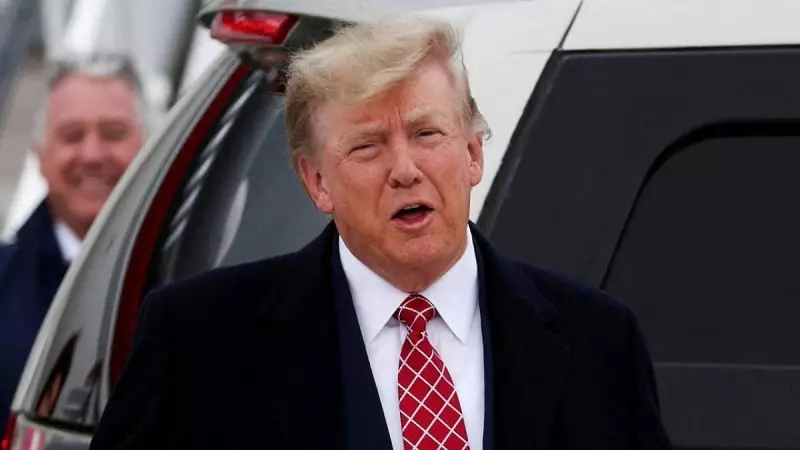
In a notable shift from his previous rhetoric, former US President Donald Trump has indicated a potential willingness for the United States to come to Ukraine's defence, albeit with significant conditions attached. His comments, made recently, represent his most explicit openness to such a commitment to date.
A Shift in Trump's Stance on Ukraine
While long advocating for a more isolationist 'America First' foreign policy and previously criticising extensive aid to Kyiv, Trump's latest remarks suggest a nuanced position. He went further than before in signalling an openness to sign up for a defensive commitment, at least in a supporting role. However, this potential support is not unconditional and comes with a clear caveat that aligns with his transactional view of international alliances.
The Details and the Caveat
The key development is Trump's acknowledgment of a possible US role in defending Ukraine against Russian aggression. This marks a departure from his earlier ambivalence. The important caveat, however, centres on his longstanding demand for European NATO members to substantially increase their own defence spending and contributions. Trump has consistently argued that the US bears a disproportionate financial burden within the alliance.

His conditional stance implies that American support for Ukraine might be contingent upon European nations first fulfilling their financial commitments to collective security. This positions any potential US action not as a unilateral guarantee but as part of a renegotiated transatlantic bargain.
Geopolitical Implications and Reactions
This development carries significant weight for global geopolitics. A potential shift in US policy under a future Trump administration could alter the strategic calculus in the ongoing conflict. European capitals, which have been bolstering their support for Ukraine independently, will likely scrutinise these comments closely. The remarks also introduce a new variable for Moscow, which has previously operated on assumptions of Western disunity.
The comments were reported by the International New York Times on 09 January 2026. As the situation evolves, the world watches to see if this represents a genuine policy evolution or a negotiating tactic. The ultimate impact on the war in Ukraine and the stability of the NATO alliance remains to be seen, hinging on the clarification of these conditions and the responses from European partners.