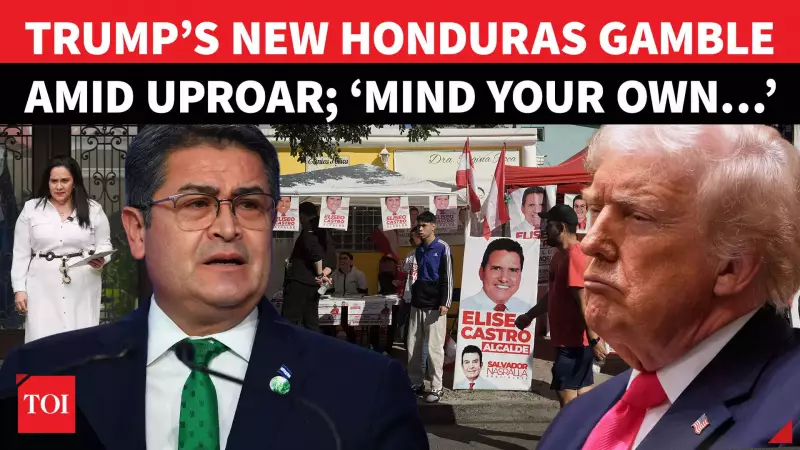
In a move that has sparked significant controversy, former US President Donald Trump has publicly defended his decision to pardon ex-Honduran President Juan Orlando Hernández. Trump labelled the prosecution and subsequent 45-year prison sentence for drug trafficking as a politically motivated "Biden-inspired witch hunt."
The Pardon and Trump's Justification
Speaking from the White House, Trump offered a robust defence of his surprise pardon, which led to Hernández's release on Monday, December 2, 2025. The former Honduran leader was convicted and handed a lengthy prison term for his alleged role in shielding powerful drug cartels and facilitating the movement of cocaine towards the United States.
Trump argued that Hernández was unfairly targeted due to his high-ranking position. He insisted that a sitting president should not face decades behind bars for actions connected to his nation's broader drug crisis. Contradicting the findings of the US judicial system, Trump claimed that many Hondurans believe their former leader was deliberately "set up."

A Political Storm and Strategic Context
This decision unfolds against a complex political backdrop. Trump's pardon comes at a time when he has been intensifying his own anti-narcotics strategy, often criticising the approaches of his predecessors. Simultaneously, he has levelled repeated allegations of political targeting against the administration of President Joe Biden.
The case of Juan Orlando Hernández is deeply intertwined with US efforts to combat drug trafficking from Latin America. Prosecutors had painted a detailed picture of a leader who, while publicly aligning with American anti-drug policies, privately conspired to protect and profit from the very cartels he pledged to fight.
Broader Implications and Reactions
The pardon is likely to have far-reaching consequences. It sends a stark message about US-Honduras relations and the perceived reliability of American judicial processes in high-profile international cases. Critics argue it undermines years of painstaking legal work and damages the credibility of US-led anti-corruption efforts in Central America.
For Trump, the move reinforces his longstanding narrative of being a disruptor of what he calls "deep state" operations and politically charged legal actions. It also aligns with his broader campaign rhetoric concerning border security and the flow of illegal drugs, often linking these issues to the policies of the Biden administration.
The defence of Hernández, therefore, is not an isolated act but a calculated element within Trump's larger political and strategic framework, one that continues to shape US policy in Latin America and dominate domestic political discourse.