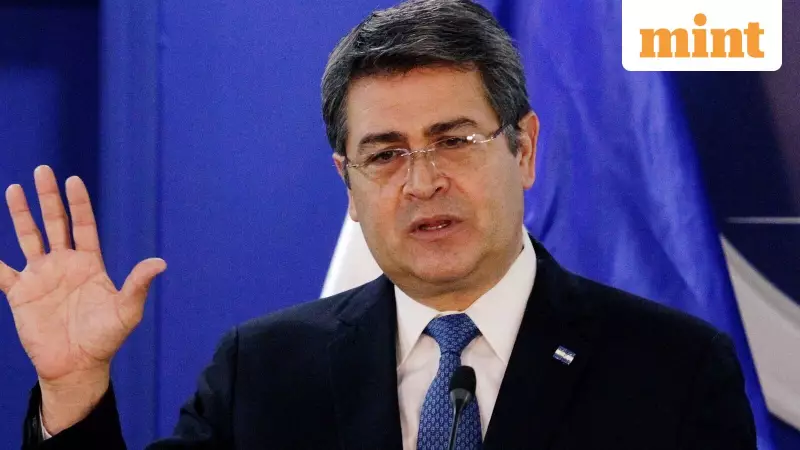
In a stunning reversal, former United States President Donald Trump has granted a pardon to former Honduran President Juan Orlando Hernandez, releasing him from a 45-year prison sentence for conspiring to import massive quantities of cocaine into the US. This decision directly contradicts Trump's long-standing public stance as a fierce opponent of illegal drugs.
Presidential Pardon Undermines Drug War
The extraordinary move, signed by Trump on Monday night, effectively frees Hernandez, who was convicted by a Manhattan jury in March 2024. The US Justice Department, under the Biden administration, proved that Hernandez abused his presidential power from 2014 to 2022, accepting millions in bribes from traffickers to protect cocaine shipments bound for the United States and to fund his political ascent.
The pardon is seen as a major blow to decades of US efforts to combat transnational drug networks. It risks severely damaging Washington's credibility across Latin America and sends a dangerous signal that political connections can override criminal accountability for serious offences.

A Letter of Flattery and Shared 'Persecution'
The path to the pardon appears to have been paved by a direct appeal from Hernandez to Trump. From prison, Hernandez wrote a lengthy letter portraying himself as a political target of the Biden administration, a claim Trump has repeatedly made about his own legal troubles. The letter, filled with flattery and addressing Trump as "Your Excellency," emphasized their shared "conservative values" and sense of injustice.
Longtime Trump adviser and conservative commentator Roger Stone played a key role, advocating for months for Hernandez's release and personally delivering the letter to Trump. Hernandez's wife stated that Stone's advocacy made a "huge difference." However, a White House official claimed Trump had not seen the letter before announcing his intent to pardon on Friday.
Upon his release from a prison in Hazelton, West Virginia, Hernandez's attorney stated the former Honduran leader is "very grateful to President Trump and relieved that this nightmare is over." Citing risks from "narco-terrorists," the attorney confirmed it is not safe for Hernandez to return to Honduras, and his future whereabouts remain unclear.
Timing, Criticism, and Regional Fallout
The pardon arrives amid heightened political tension. It was issued just a day after a closely contested presidential election in Honduras, where Trump has publicly backed conservative candidate Nasry Asfura. The move has ignited fierce criticism from US Democrats and regional observers.
US Senate Democratic leader Chuck Schumer lambasted the decision, calling it a mockery of Trump's anti-drug rhetoric, especially given recent US military deployments in the Caribbean ostensibly to combat drug flows. Honduran politician Enrique Reina criticized the pardon on social media platform X, warning of a "breakdown of all norms."
This action starkly contrasts with Trump's prior justification for aggressive anti-drug operations, including deadly attacks on boats and a military buildup near Venezuela, which he argued were necessary to stop illicit drug flows from Latin America.