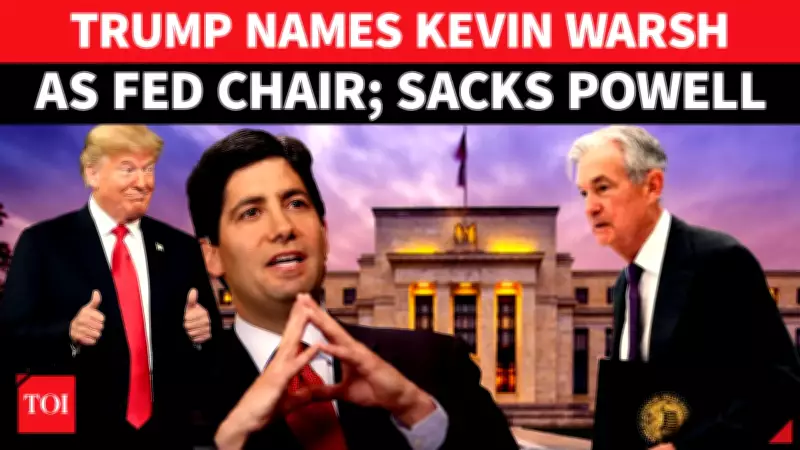
Trump Nominates Kevin Warsh as Federal Reserve Chair, Replacing Jerome Powell
In a significant move that could reshape US monetary policy, President Donald Trump has announced Kevin Warsh as his nominee to become the next Chair of the Federal Reserve. This decision sets the stage for a high-stakes confrontation over critical issues such as inflation, interest rates, and the cherished independence of the central bank.
Who is Kevin Warsh and Why is This Nomination Controversial?
Kevin Warsh is a former Federal Reserve governor who played a pivotal role during the tumultuous 2008 financial crisis, bringing a wealth of experience to the table. However, his nomination is not without controversy. Warsh has long been viewed as an inflation hawk, advocating for tighter monetary policies to control price rises. This stance contrasts sharply with President Trump's public calls for lower interest rates to stimulate economic growth.
Trump has openly criticized the current Fed leadership, including outgoing Chair Jerome Powell, whom he has labeled as "crooked" in past remarks. The president's push for a more accommodative monetary policy aligns with his broader economic agenda, but Warsh's historical positions and recent policy shifts are now under intense scrutiny. Analysts are questioning whether Warsh will maintain his hawkish views or adapt to Trump's demands, potentially compromising the Fed's autonomy.

Implications for the U.S. Economy and Global Markets
The nomination of Kevin Warsh carries profound implications for both the U.S. economy and global financial markets. As an experienced figure, Warsh's approach to managing inflation and interest rates could influence everything from consumer spending to business investments. If he leans towards higher rates to combat inflation, it might slow economic growth but stabilize prices. Conversely, if he yields to political pressure for lower rates, it could boost short-term growth at the risk of fueling inflation.
Globally, this move is being closely watched by investors and policymakers. The Federal Reserve's decisions have a ripple effect across international markets, affecting currencies, trade, and economic stability worldwide. A shift in leadership at such a critical juncture could lead to increased market volatility and uncertainty, as stakeholders assess the new chair's policy directions.
Broader Context and Future Outlook
This nomination occurs against a backdrop of ongoing economic challenges, including persistent inflation concerns and geopolitical tensions. President Trump's selection of Warsh, seen by some as a "MAGA loyalist," underscores the political dimensions of this appointment. It raises questions about the balance between political influence and the Fed's traditional role as an independent institution tasked with steering the economy.
As the confirmation process unfolds, all eyes will be on how Warsh navigates these complex dynamics. His ability to uphold the Fed's credibility while addressing presidential priorities will be crucial. For now, the nomination signals a potential turning point in U.S. monetary policy, with lasting effects on economic trajectories at home and abroad.