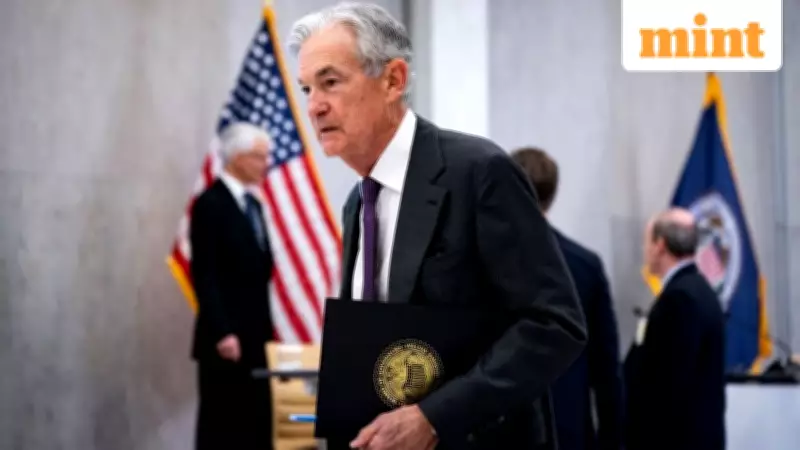
Trump-Powell Federal Reserve Conflict Intensifies Amid Political Pressure
The ongoing and highly publicized dispute between President Donald Trump and Federal Reserve Chair Jerome Powell has once again surged into the forefront of national attention. This resurgence follows a clear and firm signal from the central bank's leadership that they will not alter monetary policies in response to political demands or external pressure.
Federal Reserve Holds Firm on Interest Rates
On Wednesday, the Federal Reserve announced its decision to maintain interest rates steady within the target range of 3.5% to 3.75%. This move comes despite intense and persistent pressure from President Trump, who has repeatedly urged the central bank and its chairman, Jerome Powell, to implement rate cuts to lower borrowing costs across the economy.
By steadfastly refusing to reduce rates, the leaders of the Federal Reserve have powerfully reaffirmed their institution's independence from the White House. This principle of central bank autonomy is a cornerstone of economic governance, upheld and defended by central bank chiefs worldwide to ensure monetary decisions are based on economic fundamentals rather than political considerations.

Escalation to Criminal Investigation
The standoff between Trump and Powell has evolved beyond a mere war of words, escalating to a more serious and unprecedented level. According to a report by NBC News, Powell and the Federal Reserve are now facing a criminal investigation initiated by Jeanine Pirro, the U.S. Attorney for the District of Columbia and a close ally of President Trump.
This criminal probe is reportedly linked to Powell's testimony before Congress in June of last year, concerning the costs associated with a Federal Reserve building renovation. Powell has publicly condemned this inquiry, characterizing it as a politically motivated attempt to exert pressure over the Fed's refusal to lower interest rates.
Trump's Criticism and Economic Arguments
President Trump has launched multiple verbal attacks against Powell in the past, but his latest remarks have been particularly sharp and pointed. He has criticized Powell for refusing to cut interest rates, accusing him of damaging the nation's economic health and even undermining national security through his monetary policy decisions.
These criticisms are not entirely new, as the president has previously argued that the Federal Reserve's cautious and measured approach is adversely affecting businesses, financial markets, and his broader economic agenda. Trump has further connected his push for rate cuts to his administration's tariff policies, claiming that these measures have strengthened the U.S. economy and increased government revenues.
Powell's Defense of Fed Independence
In response to the mounting political pressure, Jerome Powell has consistently and vigorously defended the Federal Reserve's independence. He insists that monetary policy must be guided primarily by assessments of inflation risks and comprehensive economic data, rather than succumbing to political pressure emanating from the White House or any other external source.
Powell's Term and Succession Prospects
Jerome Powell's term as Chairman of the Federal Reserve is set to conclude in May. However, as reported by Reuters news agency, he is not obligated to leave his position on the Washington-based Board of Governors until 2028, which could provide a buffer against immediate political changes.
The search for a new Federal Reserve chair is reportedly nearing its conclusion, with President Trump expected to announce his chosen successor in the near future. Once a nominee is selected, the individual's name will be submitted to the Senate for the confirmation process, a critical step in the appointment.
The frontrunners for this high-stakes and influential role include several prominent figures:
- Kevin Hassett, the White House National Economic Director
- Kevin Warsh, a former Federal Reserve official
- Christopher Waller, a current Federal Reserve Governor
- Rick Rieder, an executive at BlackRock
This ongoing saga underscores the delicate balance between political influence and central bank independence, a dynamic that continues to shape economic policy and market expectations in the United States.