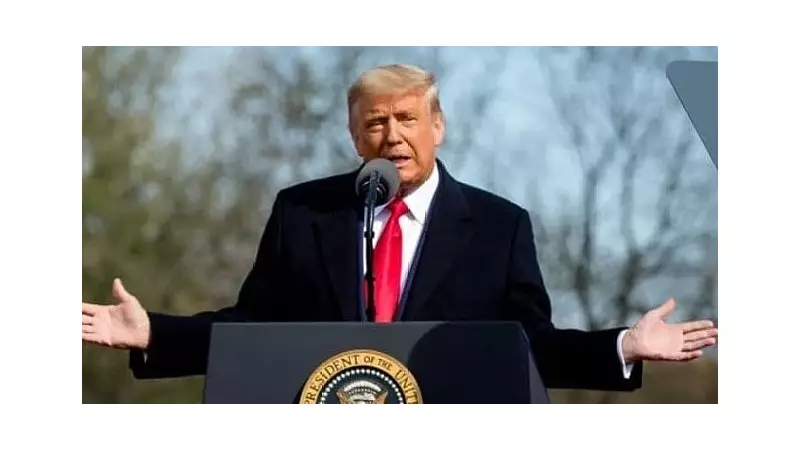
In a significant move, former US President Donald Trump has declared that National Guard troops are being withdrawn from three major American cities: Chicago, Los Angeles, and Portland. This decision marks a shift in the federal government's approach to handling the prolonged civil unrest and protests that have gripped these urban centres for months.
The Announcement and Immediate Context
President Trump made the announcement, stating that the National Guard presence was being removed from the three cities. This development comes after a period of intense and often violent demonstrations, primarily driven by calls for racial justice and police reform following the death of George Floyd. The federal government had previously deployed these forces, alongside other federal law enforcement officers, to assist local authorities in quelling riots and protecting federal property.
The timeline is crucial: the unrest has been ongoing for over 100 days in Portland, Oregon, where clashes between demonstrators and federal agents became a nightly occurrence. Similarly, Chicago and Los Angeles have witnessed large-scale protests, incidents of looting, and confrontations. The deployment of the National Guard was a contentious point, with critics arguing it escalated tensions, while supporters claimed it was necessary to restore order.

Reactions from City Officials and Mayors
The decision has elicited mixed reactions from local leaders. Mayors of these cities, who have often been at odds with the Trump administration over the handling of the protests, have responded cautiously. While some have long called for a reduction in federal presence, they also express concerns about maintaining public safety with their own resources.
For instance, the Mayor of Portland, Ted Wheeler, has been a vocal critic of what he described as an "occupying force" inflaming the situation. Chicago's Mayor, Lori Lightfoot, has also had a fraught relationship with the federal strategy. The withdrawal places the primary responsibility for managing any future unrest squarely back on local law enforcement and city leadership.
Implications for Security and Ongoing Protests
The removal of the National Guard raises immediate questions about security dynamics in these metropolitan areas. Local police departments will now bear the full burden of monitoring and controlling large gatherings. This comes at a time when police budgets and capabilities are under intense public scrutiny and debate.
A key concern is whether this move will lead to a de-escalation or a new phase of uncertainty. Protest organisers may see the withdrawal as a victory, potentially changing the tone of demonstrations. However, the underlying issues that sparked the protests remain largely unaddressed at a national level, suggesting that civic activism will continue in some form.
Furthermore, the role of other federal law enforcement agencies remains unclear. The announcement specifically addresses the National Guard, but does not necessarily cover other federal officers from agencies like the Department of Homeland Security, who were deployed in places like Portland.
Political Ramifications and National Discourse
This decision is inevitably viewed through a political lens, occurring in the final stretch of a heated presidential election campaign. The Trump administration's handling of civil unrest has been a central theme, with opponents accusing it of heavy-handed tactics and supporters praising a "law and order" stance.
By ordering the withdrawal, the administration may be attempting to recalibrate its message, perhaps signalling a confidence that local authorities can now handle the situation or responding to sustained political pressure. The move will undoubtedly be analysed for its impact on voters in these key states and cities.
In conclusion, President Trump's order to remove the National Guard from Chicago, Los Angeles, and Portland is a pivotal moment in the ongoing narrative of America's summer of protest. It transfers a significant security responsibility back to local governments while leaving the deep-rooted societal challenges unresolved. The coming weeks will reveal whether this leads to a peaceful path forward or a new set of complexities for these iconic American cities.