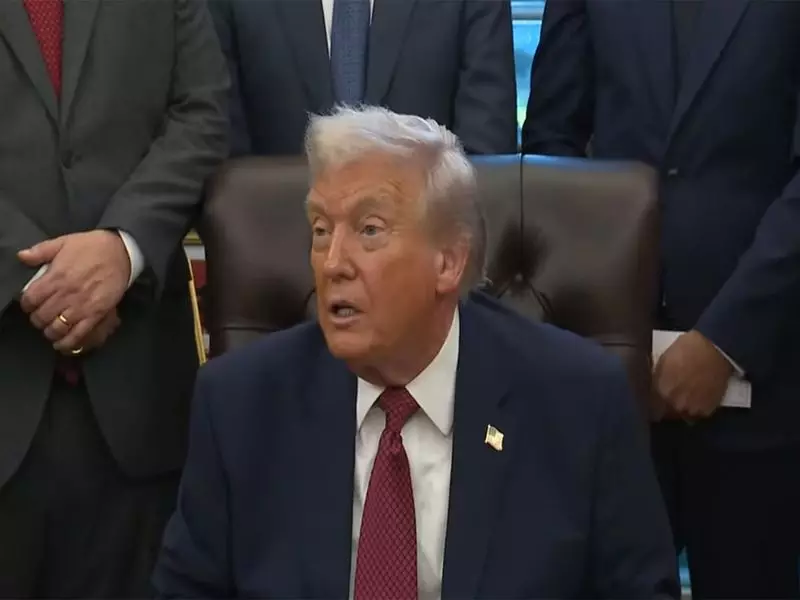
In a significant revelation with major geopolitical implications, former US President Donald Trump has disclosed that a delegation from the United States recently met with Russian President Vladimir Putin. Trump asserted that the Russian leader is keen to find a way to end the ongoing conflict in Ukraine.
The Meeting and Trump's Assertions
Speaking at a campaign event in Philadelphia, Trump stated that the meeting between the American delegation and President Putin took place just a few days prior. While he did not name the specific individuals who comprised the US group, his comments have ignited a firestorm of speculation and analysis. The core of Trump's claim is that Vladimir Putin "wants to end the war" in Ukraine and is seeking a negotiated settlement.
This claim comes amidst a period of intensified hostilities on the ground in Ukraine, with Russian forces making incremental gains. Trump's narrative suggests a potential opening for diplomacy that contrasts sharply with the current official US stance of unwavering military support for Kyiv. The former president positioned this as a failure of the Biden administration's foreign policy, arguing that such dialogue should be happening at the highest levels.

Context of the Alleged Peace Plan
The revelation is tied to Trump's long-standing criticism of US involvement in the conflict. He has repeatedly claimed that if he were in office, he could resolve the war within 24 hours, though he has provided scant details on how. This latest statement about a delegation meeting offers a glimpse into the kind of backchannel diplomacy he advocates for.
Trump suggested that the path to peace involves direct talks between the US, Russia, and Ukraine. His approach appears to hinge on leveraging US influence to bring both parties to the table, a strategy that critics argue could pressure Ukraine into making territorial concessions. The news of a private US delegation meeting with Putin, if confirmed, raises questions about the coordination of foreign policy and the role of private citizens in sensitive diplomatic overtures.
Global Reactions and Implications
The immediate reaction from the White House was one of distance and denial. A spokesperson for the National Security Council clarified that the individuals involved were not acting on behalf of the US government. This underscores the unofficial nature of the contact and attempts to separate the current administration's policy from Trump's initiatives.
In Ukraine, officials have consistently expressed skepticism about negotiating with Putin, citing bad faith from previous agreements and the fundamental issue of territorial integrity. The prospect of any US-led peace plan that does not fully restore Ukraine's borders is likely to be met with firm resistance in Kyiv.
For the international community, especially European allies, Trump's comments and the alleged meeting signal a potential dramatic shift in US foreign policy should he return to power. It reinforces concerns about a possible US withdrawal of support for Ukraine, which would fundamentally alter the strategic balance in Europe. The development adds a new layer of complexity to the ongoing geopolitical struggle and the future of the Russia-Ukraine war.
As the US presidential election campaign heats up, foreign policy, and specifically the handling of the Ukraine conflict, is set to remain a central point of debate. Trump's latest claims ensure that the prospects for peace, and the means to achieve it, will be scrutinized and contested in the global arena for months to come.