Trump Dismisses Reports of General's Iran War Warnings as 'Fake News'
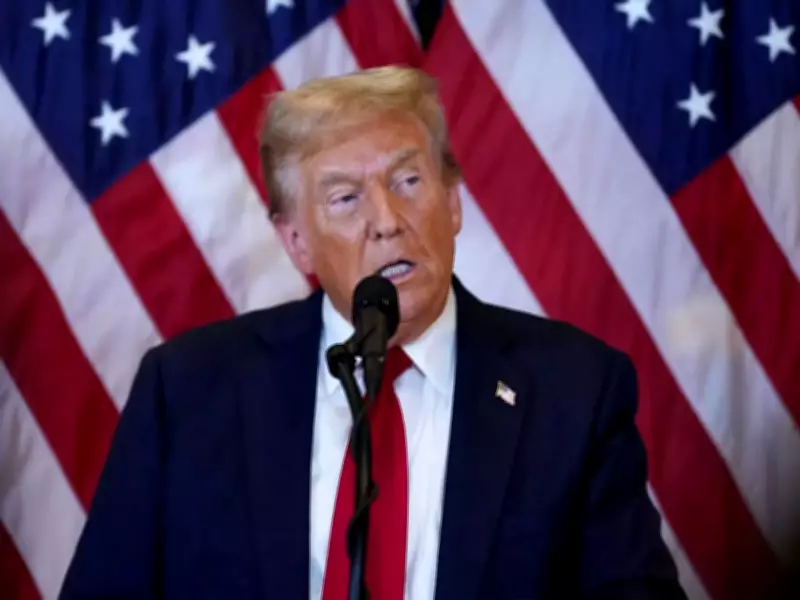
US President Donald Trump has firmly rejected recent media reports suggesting that America's top military commander, General Daniel Caine, warned against a potential war with Iran. In a statement, Trump called these claims inaccurate and misleading, emphasizing that the stories are "100% incorrect."
President's Defense of General Caine on Truth Social
Elaborating further on Truth Social, Trump clarified General Caine's stance. He stated, "General Caine, like all of us, would like not to see War but, if a decision is made on going against Iran at a Military level, it is his opinion that it will be something easily won." Trump highlighted Caine's expertise, noting his involvement in Operation Midnight Hammer, an attack on Iranian nuclear development, which he described as successfully destroyed by US B-2 Bombers.
Trump praised Caine as a "Great Fighter" who represents the world's most powerful military. He added, "He has not spoken of not doing Iran, or even the fake limited strikes that I have been reading about, he only knows one thing, how to WIN and, if he is told to do so, he will be leading the pack." The president asserted that all reports on a potential Iran war have been written incorrectly and purposefully so.

Contradictory Reports and Military Buildup
However, The Wall Street Journal has reported that General Caine warned an extended confrontation with Iran "could incur significant costs to US forces and munitions stockpiles." This contrasts sharply with Trump's assertions.
The situation is unfolding amid heightened tensions. Thousands of people in Iran reportedly received anonymous text messages on Monday warning of possible US action and referring to the American president as a "man of action," according to Iran International English, citing Iranian state media.
Simultaneously, the United States has been reinforcing its military presence in the region, raising concerns about a broader conflict. The New York Times reported that hundreds of US servicemen have been relocated from the Al Udeid base in Qatar, with similar movements observed in Bahrain, Iraq, Syria, Kuwait, Saudi Arabia, Jordan, and the United Arab Emirates.
Officials fear that the 30,000 to 40,000 American troops stationed across the region could become primary targets for Iran if a full-scale war erupts.
Ongoing Nuclear Negotiations
Despite the military posturing, diplomatic efforts continue. Iran's Foreign Minister Abbas Araghchi is expected to meet a US delegation in Geneva on Thursday for the next round of negotiations over Tehran's nuclear programme. The two sides have already held two rounds of talks this month aimed at securing a deal.
Trump commented on this, saying, "I am the one that makes the decision, I would rather have a Deal than not but, if we don't make a Deal, it will be a very bad day for that Country and, very sadly, its people."
The conflicting narratives between Trump's statements and media reports underscore the volatile nature of US-Iran relations, with military readiness and diplomatic talks proceeding in tandem.