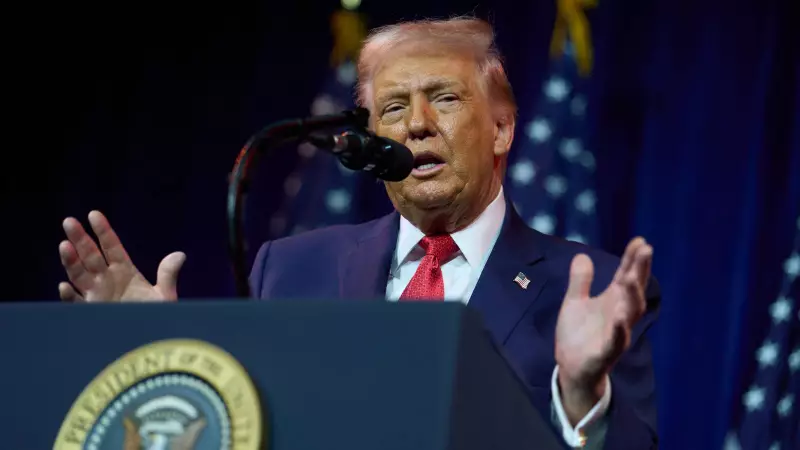
In a provocative social media post, US President Donald Trump has shared an edited image that portrays him as the "Acting President of Venezuela." The post, made on his Truth Social platform on Sunday, has sparked widespread discussion and analysis.
The Controversial Social Media Post
The image shared by Trump is designed in a Wikipedia-style infobox format. It boldly lists Donald Trump as the incumbent president of Venezuela, with an effective date of January 2026. The same graphic also reinforces his US political identity, stating he is the 45th and 47th President of the United States, who assumed office on January 20, 2025.
Context and Immediate Reactions
This digital maneuver comes amid a complex geopolitical landscape. Venezuela has been under the leadership of Nicolás Maduro, whose 2018 re-election was disputed by many nations, including the United States. The Trump administration had previously recognized opposition leader Juan Guaidó as the country's legitimate interim president.

Political analysts are interpreting the post as a symbolic gesture, potentially aimed at reiterating a hardline stance against the Maduro government. It blends futuristic projection with current political narratives, creating a unique piece of political messaging. The choice of a Wikipedia-style format lends an air of factual authority to the speculative claim.
Broader Implications and Analysis
Such posts from a sitting US president are unprecedented and highlight the evolving use of social media for diplomatic and political signaling. The post does not carry an official policy announcement but serves as a powerful visual statement. Experts suggest it may be intended for both domestic and international audiences, reinforcing Trump's foreign policy approach towards Venezuela.
The mention of the date January 2026 is particularly notable, as it falls beyond the current US presidential term, inviting speculation about future political ambitions or long-term strategic visions. The image's viral nature ensures the message reaches global audiences, bypassing traditional diplomatic channels.
This incident underscores the blurred lines between personal social media activity and official state communication in the modern political era. The response from Venezuelan authorities and the international community is awaited, as the post adds a new, unconventional layer to the ongoing political discourse surrounding Venezuela's leadership.