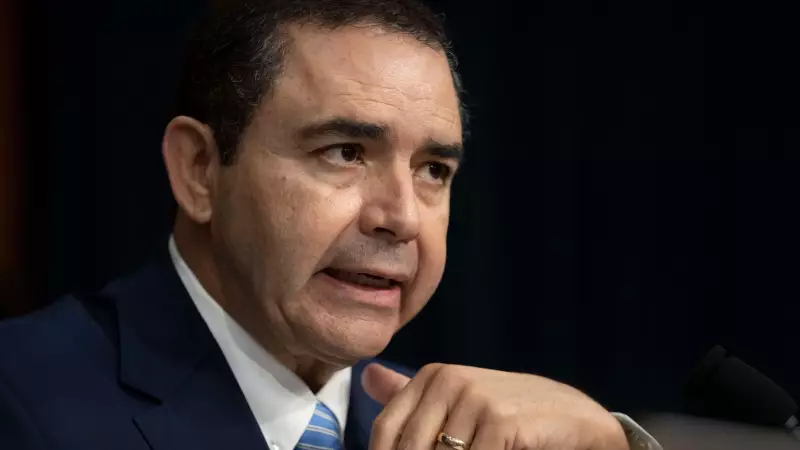
In a sharp political turn, former US President Donald Trump has publicly attacked Democratic Congressman Henry Cuellar, a surprising target given Trump granted him a presidential pardon just a few years ago. The verbal assault came after Cuellar, a conservative Democrat from Texas, criticized the Biden administration's handling of the US-Mexico border, a critique that ironically aligned with Trump's own long-standing position.
The Pardon and the Sudden Attack
The core of this political drama lies in a controversial past decision. In December 2020, during his final weeks in office, Donald Trump issued a full pardon to Congressman Henry Cuellar. This clemency was related to an investigation into potential violations of foreign lobbying laws, though Cuellar was never formally charged with any crime. The pardon was seen as a notable act, extending clemency to a member of the opposing party.
Fast forward to the present election cycle, and the dynamic has shifted dramatically. Trump's attack was launched via his social media platform, Truth Social. He accused Cuellar of being "so bad on Border Security" despite representing a border district in Texas. This criticism emerged directly after Cuellar voiced his disapproval of the Biden administration's approach to border management, highlighting the complex and often contradictory nature of political alliances.

Cuellar's Stance and the Border Policy Debate
Henry Cueller is no ordinary Democrat. Representing Texas's 28th congressional district, he holds a unique position as one of the most conservative Democrats in the House. His district stretches along a significant portion of the US-Mexico border, making immigration and security paramount issues for his constituents.
Recently, Cuellar has been openly critical of President Joe Biden's border policies. He has argued for stricter measures and more robust enforcement, a stance that frequently puts him at odds with the progressive wing of his own party but closer to Republican viewpoints. It is this very criticism that seemingly triggered Trump's ire, despite their apparent alignment on the issue's substance.
The congressman responded to Trump's attack by standing firm on his record. He emphasized his consistent advocacy for his district's needs, including fighting for border security resources and opposing policies he believes are harmful. Cuellar pointedly noted that his duty is to his constituents, not to any political figure, past or present.
Political Repercussions and the 2024 Landscape
This incident sheds light on the volatile and unpredictable nature of the 2024 US election campaign. Trump's decision to target a Democrat he once pardoned underscores his campaign strategy of maintaining a relentless offensive stance, even against those who may occasionally share his policy views. It signals that past favors hold little weight in the current high-stakes political battle.
For Cuellar, the attack presents both a challenge and a potential opportunity. While it draws negative attention from a powerful political foe, it may also bolster his image as an independent-minded representative in his conservative-leaning district. He is currently facing a primary challenge from a more progressive candidate, making his positioning on border security critically important.
The episode also highlights the deep internal divisions within the Democratic Party on key issues like immigration. Cuellar's centrist, border-focused approach is a constant source of tension with the party's left flank. Trump's intervention adds an external layer of pressure, potentially complicating Democratic strategy in key border states.
Ultimately, this exchange between Trump and Cuellar is more than a personal feud. It is a microcosm of the larger debates defining American politics: immigration policy, partisan loyalty, and the long shadow cast by the Trump presidency. As the 2024 election intensifies, such clashes between unlikely figures are likely to become more frequent, revealing the complex and often messy realities of governance and campaign rhetoric.