

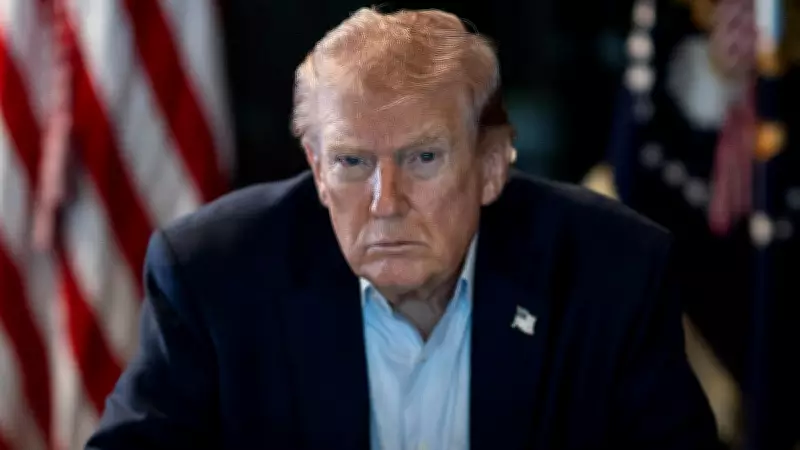
Trump Questions NATO's Role in Potential Iran Conflict, Snarls at European Allies
In a provocative statement that has sent shockwaves through international diplomatic circles, former United States President Donald Trump has openly questioned the necessity of NATO support for European allies in the event of a war with Iran. This latest outburst from the Republican leader has reignited debates about the future of transatlantic security and America's commitment to its traditional alliances.
Trump's Controversial Remarks on NATO and Iran
During a recent public appearance, Trump made headlines by snarling at European allies, suggesting they should not automatically expect American military backing through NATO if hostilities with Iran escalate. "We don't have to be there for NATO," Trump declared, emphasizing what he perceives as disproportionate burden-sharing within the alliance. His comments specifically targeted European nations, implying they have not contributed sufficiently to collective defense efforts.
This stance marks a significant departure from longstanding US foreign policy, which has consistently affirmed Article 5 of the NATO treaty—the principle that an attack on one member is an attack on all. Trump's remarks have particularly alarmed officials in Europe, where concerns about Iran's nuclear program and regional aggression have been mounting.

European Reactions and Security Implications
The reaction from European capitals has been one of alarm and frustration. Diplomats and defense officials have expressed deep concern that Trump's rhetoric could undermine NATO's credibility at a critical juncture. With Iran continuing to advance its nuclear capabilities and engage in proxy conflicts across the Middle East, European nations have been counting on NATO's collective security framework as a deterrent.
"This kind of talk from a former and potentially future US president creates dangerous uncertainty," noted one European security analyst. "It sends mixed signals about America's willingness to honor its treaty obligations precisely when clear deterrence is needed most."
The implications extend beyond immediate diplomatic tensions. Military strategists warn that questioning NATO's mutual defense commitments could embolden adversaries like Iran, potentially increasing the risk of miscalculation or escalation in the region.
Historical Context and Trump's NATO Skepticism
Trump's latest comments are consistent with his longstanding skepticism toward NATO, which was a hallmark of his presidency from 2017 to 2021. During his term, he frequently criticized European members for not meeting the alliance's defense spending target of 2% of GDP, even threatening to withdraw US support. His "America First" philosophy has often prioritized bilateral deals over multilateral alliances like NATO.
However, the specific focus on Iran represents a new and potentially more dangerous dimension to his criticism. European nations have been actively involved in diplomatic efforts to contain Iran's nuclear ambitions, including participation in the now-stalled Joint Comprehensive Plan of Action (JCPOA). Trump's suggestion that NATO support might be conditional in an Iran conflict could complicate these delicate negotiations.
Political Fallout and Future Scenarios
The political fallout from Trump's remarks is already unfolding on both sides of the Atlantic. In the United States, foreign policy experts from both major parties have expressed concern about the potential damage to America's reputation as a reliable ally. Meanwhile, European leaders face increased pressure to bolster their own defense capabilities independently of US guarantees.
Several scenarios could emerge from this controversy:

- Increased European defense spending: Trump's criticism may accelerate efforts by European NATO members to meet and exceed the 2% GDP defense spending target.
- Strained US-Europe relations: The comments could further damage transatlantic trust, particularly if Trump returns to power in the 2024 presidential election.
- Iranian perception shifts: Tehran might interpret the discord as weakness within the Western alliance, potentially affecting its calculations regarding nuclear negotiations and regional aggression.
As the 2024 US presidential campaign heats up, Trump's position on NATO and Iran is likely to remain a contentious issue. His remarks have not only questioned specific alliance commitments but have fundamentally challenged the postwar international order that has maintained relative peace in Europe for decades.
The coming months will reveal whether this episode represents temporary political posturing or a more permanent shift in America's approach to its oldest and most important military alliance. What remains clear is that Trump's snarling at European allies over Iran has introduced new uncertainties into an already volatile global security landscape.





