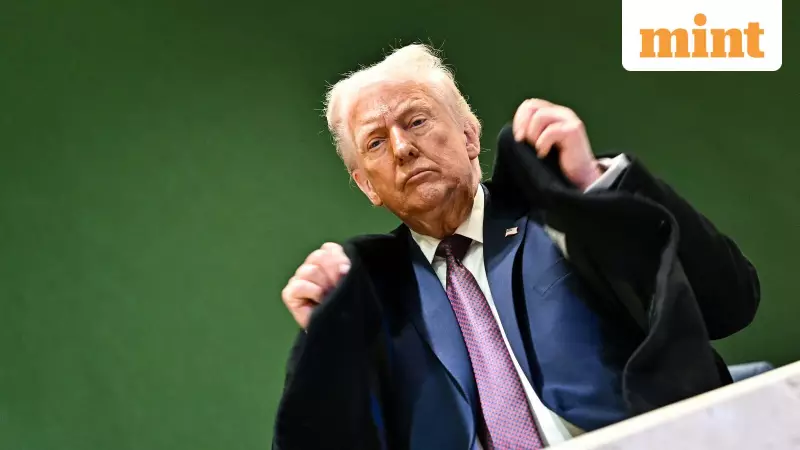
Trump Stops Dyeing Hair, Shifts Focus to Legacy as 80th Birthday Approaches
US President Donald Trump has made a significant personal change by ceasing to dye his hair golden, allowing it to return to its natural white color. This move, described by a senior Republican staffer as the "only concession to age," comes as Trump nears his 80th birthday on June 14. Despite claiming he feels the same as he did "40 years ago," this change signals a broader shift in his priorities toward legacy-building.
Focus on Tangible Legacy Projects
According to a senior White House official, Trump has been thinking more about what he will be remembered for, leading to ambitious construction projects. A key initiative is a $400 million White House ballroom, announced by Press Secretary Karoline Leavitt on July 31 as a 'gift' to Americans. This 90,000-square-foot space, expected to host 650 seated guests, required demolishing the historic East Wing. Additionally, plans include a triumphal arch, dubbed "Arc de Trump," near the Lincoln Memorial to mark the 250th anniversary of the United States.
Legacy Through Structures, Not Policies
A Republican operative with administration ties noted that Trump doesn't think of legacy in terms of policies enacted. Instead, his focus is on "buildings he can leave behind and prizes he can win." This is evident in his pursuit of the Nobel Peace Prize and efforts to rename the John F. Kennedy Center, emphasizing tangible achievements over legislative accomplishments.

Health and Public Perception
Despite frequent bruising on his hands and swollen ankles raising health concerns, Trump insists, "I don't need any taking care of because I'm in perfect health." Deputy Chief of Staff Stephen Miller has labeled him "The Superhuman President," citing superior memory, stamina, and energy. However, armchair physicians have at times speculated about his health, adding to public discourse as he ages.
As Trump transitions into his octogenarian years, his cessation of hair dye and focus on grand projects highlight a deliberate pivot toward securing a lasting legacy through physical monuments and personal milestones, rather than traditional policy measures.