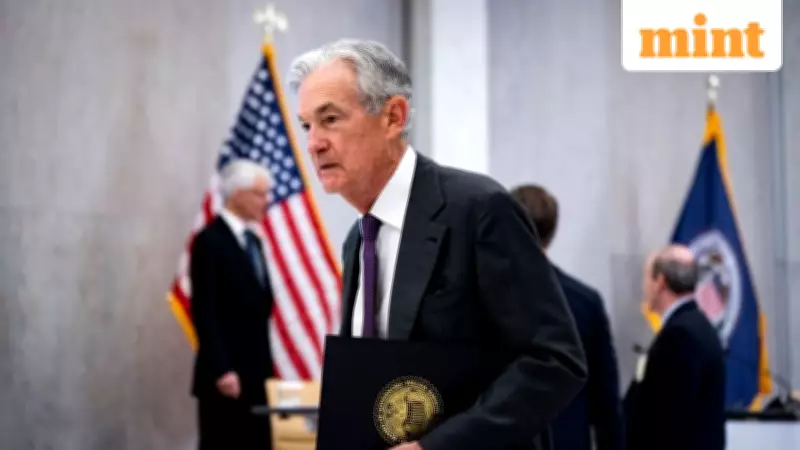
In a significant development for global financial markets, US President Donald Trump has confirmed that he will announce a new candidate for the Chairman of the US Federal Reserve on Friday, January 30, 2026. This announcement comes as the current Chair, Jerome Powell, approaches the end of his designated term, sparking widespread speculation about the future leadership of the central bank.
Trump's Announcement at Kennedy Centre
President Trump made the revelation during a public appearance at the Kennedy Centre on Thursday, January 29, 2026. He stated, "I'll be announcing the Fed chair tomorrow morning," indicating a swift move to name a successor to Jerome Powell. This decision aligns with Trump's repeated calls for further interest rate cuts to stimulate the US economy, highlighting potential shifts in monetary policy under new leadership.
Background: Fed's Recent Policy Decision
The announcement follows closely on the heels of the US Federal Reserve's Federal Open Market Committee (FOMC) meeting, which concluded on Wednesday, January 28, 2026. In that meeting, the FOMC, led by Jerome Powell, decided to maintain the key benchmark interest rates steady within the range of 3.50% to 3.75%.

FOMC Voting and Rationale
Out of the 12 FOMC members, 10 voted in favor of holding the rates, while two members, Stephen Miran and Christopher Waller, advocated for a 25-basis-point rate cut. The official statement from the Fed emphasized that the Committee aims to carefully assess incoming data, the evolving economic outlook, and the balance of risks before making any further adjustments to the federal funds rate target range.
This cautious approach reflects the central bank's ongoing efforts to navigate economic uncertainties, even as political pressures mount for more aggressive monetary easing.
Implications for the US Economy
The impending change in Fed leadership could have profound implications for US monetary policy, particularly given Trump's vocal stance on rate cuts. As the world watches, the announcement on January 30 is expected to set the tone for future economic strategies and market reactions.
Stakeholders are advised to monitor updates closely, as this transition marks a critical juncture in US financial governance, with potential ripple effects across global markets.