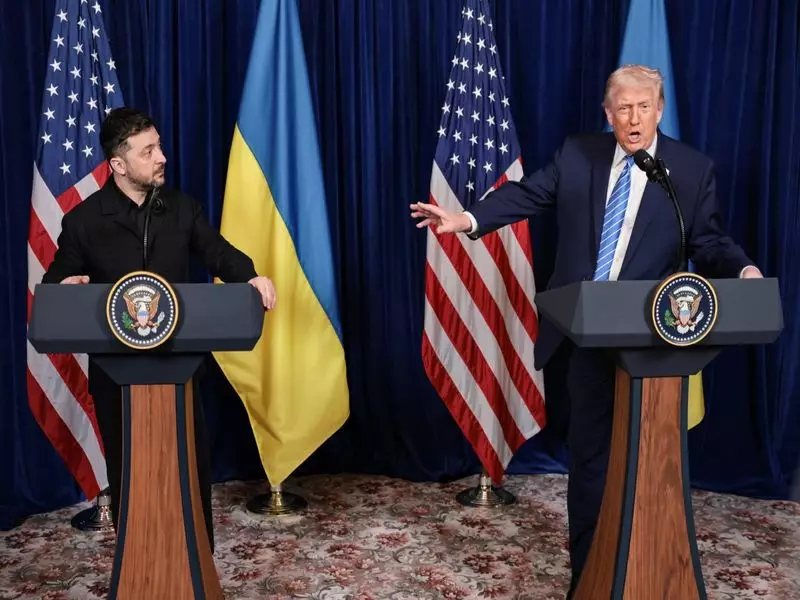
In a significant development concerning the ongoing Russia-Ukraine conflict, former United States President Donald Trump has declared that a peace agreement to end the war is now "very close". This statement followed a detailed conversation he held with Ukrainian President Volodymyr Zelenskyy.
Trump's Optimistic Assessment Post-Zelenskyy Dialogue
Donald Trump, the presumptive Republican nominee for the upcoming US presidential election, shared his positive outlook after engaging with the Ukrainian leader. He indicated that while the broad framework for peace is taking shape, there remain "one or two thorny issues" that need to be ironed out before a final deal can be struck. This conversation underscores Trump's continued involvement in high-stakes international diplomacy, even while not in office.
The former president did not delve into the specific nature of these challenging points, leaving analysts to speculate on whether they pertain to territorial concessions, security guarantees, or the future status of Crimea and the Donbas region. His assertion suggests that back-channel negotiations or discussions facilitated by his team have progressed further than what is publicly acknowledged by the official administrations in Kyiv or Washington.

Context of the Talks and Political Implications
This development comes at a critical juncture. The war in Ukraine has stretched for over two years, with immense human and economic cost. President Zelenskyy has consistently championed a 10-point peace plan that demands a complete Russian withdrawal. Conversely, Moscow has shown little interest in ceding the occupied territories.
Trump's comments are politically charged, aligning with his long-stated belief that he could swiftly negotiate an end to the conflict if returned to power. He has previously claimed he could resolve the war "within 24 hours". By announcing progress now, he positions himself as a dealmaker capable of achieving what the current Biden administration has not—a definitive path to peace. This narrative is likely to be a central theme in his election campaign, appealing to voters weary of prolonged foreign entanglements.
Reactions and the Road Ahead
The immediate reaction from official Ukrainian and US channels has been muted, with no immediate confirmation or elaboration from President Zelenskyy's office regarding the specifics of his talk with Trump. Experts caution that while any dialogue is welcome, the devil lies in the details. The "thorny issues" Trump referenced are precisely the ones that have deadlocked previous peace efforts.
Key questions remain unanswered:
- Would any proposed deal be acceptable to both Kyiv, which vows to reclaim all its land, and Moscow, which has illegally annexed four regions?
- What role would Western security assurances play?
- How would such an agreement be enforced?
As the US election season heats up, Trump's pronouncements on foreign policy, particularly regarding Ukraine, will have profound implications. They not only shape the domestic political debate but also send signals to allies and adversaries worldwide about America's potential future foreign policy direction. The claim of a peace deal being very close adds a new, unpredictable dimension to the already complex geopolitical landscape.