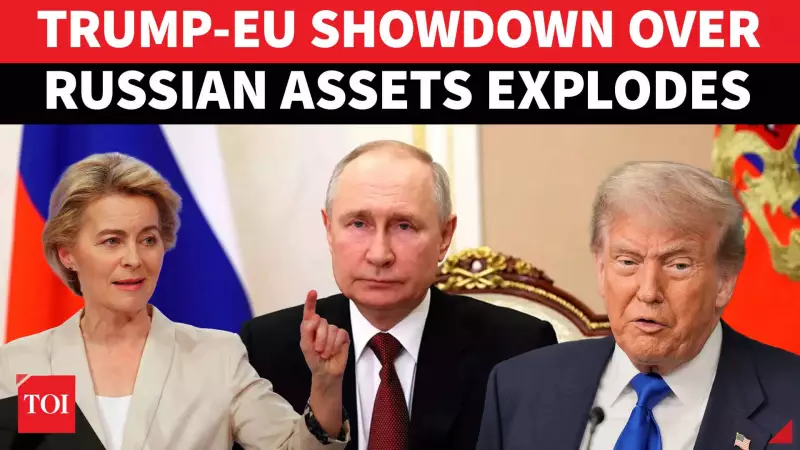
A significant transatlantic rift is emerging over the fate of billions in frozen Russian assets, with the new Trump administration in Washington actively lobbying European governments to block a key plan championed by the European Union. The core of the dispute revolves around a massive sum of €140 billion in Russian state funds that were immobilized following Moscow's invasion of Ukraine.
US Seeks Leverage, EU Pushes for Immediate Use
According to a recent Bloomberg report, officials from the Trump administration are urging EU member states to oppose a proposal spearheaded by European Commission President Ursula von der Leyen. Her plan aims to utilize these frozen Russian funds to provide financial support for Ukraine's war effort and reconstruction. The United States, however, is advocating for a different strategy. Washington wants the assets to remain frozen and used as a crucial bargaining chip in potential future peace negotiations with Moscow.
This stance puts the U.S. at odds with key European powers, notably Germany, which alongside the broader EU leadership, is pushing to make the funds available to Ukraine now. The disagreement highlights a fundamental divergence in approach to ending the conflict, with Europe leaning towards strengthening Ukraine's immediate position and the U.S., under Trump, prioritizing a negotiated settlement where the frozen assets serve as leverage.

Legal Warnings and Escalating Tensions
The political friction is compounded by serious legal concerns. Belgium, where a substantial portion of these assets is held, has issued warnings about the major legal risks involved in seizing and repurposing the funds. The complex international legal framework surrounding sovereign asset seizures makes any move fraught with potential challenges and retaliatory measures.
The lobbying effort by the Trump administration, reported on December 06, 2025, signals a potential shift in U.S. foreign policy regarding the Ukraine war and its relationship with European allies. The move to pressure EU governments against a plan they have been developing underscores the growing tensions across the Atlantic on how to manage the protracted conflict and deal with Russia's aggression.
Broader Implications for Global Diplomacy
This clash over the frozen Russian assets is more than a financial dispute; it is a test of Western unity. The outcome will signal whether the U.S. and EU can maintain a coordinated front against Russia or if strategic priorities are diverging. For Ukraine, the stakes are immense, as access to these funds could significantly impact its military capabilities and long-term recovery. The situation remains fluid, with international observers closely watching how European capitals respond to the pressure from Washington and whether a compromise can be reached.