

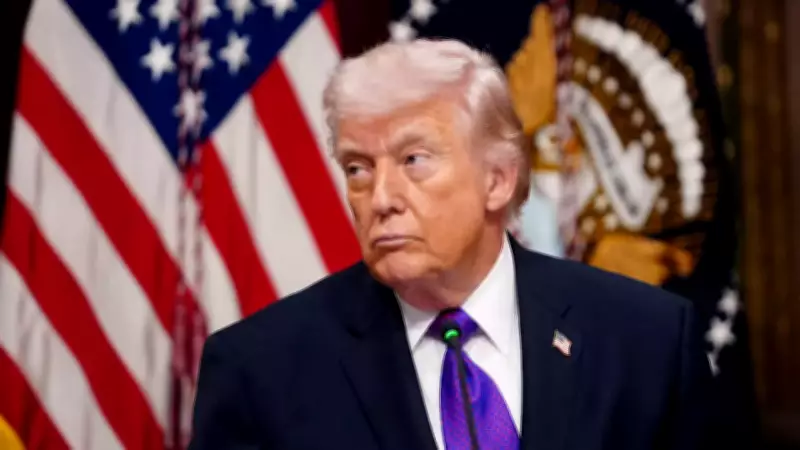
Trump Announces Escalated US Strikes on Iran Amid Regional Turmoil
President Donald Trump has declared that the United States will be hitting Iran "very hard over the next week", signaling a significant escalation in military action. This announcement comes shortly after the US issued a partial 30-day waiver allowing purchases of sanctioned Russian oil, a move aimed at easing global fuel prices that have been driven up by the ongoing US-Israeli war against Iran.
Conflicting Statements and Economic Impact
Oil prices have experienced extreme volatility due to Trump's shifting comments on the war's duration, which has prompted Iran to attack vessels in the strategic Strait of Hormuz. In a recent Fox News interview, Trump stated the US would escort shipping in the strait "if we needed to", despite previously claiming the war was "complete" and promising to guarantee vessel safety. Benchmark Brent crude has eased about 0.6% to around $99.8 per barrel, yet remains up nearly 40% since the conflict began.
Human Toll and Regional Escalation
After nearly two weeks of intense fighting, the conflict has resulted in approximately 2,000 fatalities, with the majority occurring in Iran, but significant numbers also reported in Lebanon and across the Gulf region. This marks the first time in decades that the Gulf has found itself on the front lines of a West Asian conflict.

- Israeli warplanes conducted heavy air strikes on Beirut's suburbs, leading Lebanon's interior minister to warn that authorities cannot accommodate the hundreds of thousands seeking refuge in the capital.
- Israel has deployed additional troops to combat Iran-backed Hezbollah, dropping leaflets threatening "Gaza-scale devastation" and warning of further attacks on Lebanese infrastructure.
- Iran has responded with increased missile and drone attacks on Israel, with Iranian drones reportedly entering Kuwait, Iraq, the UAE, Bahrain, and Oman.
Defiance in Tehran and US Military Assessment
A large explosion rocked central Tehran during an annual state-organized rally supporting Palestinians and calling for Israel's demise. Iranian Press TV reported one woman killed in the airstrike, which Israel had warned would target the area. In a show of defiance, senior Iranian officials including President Masoud Pezeshkian, Foreign Minister Abbas Araqchi, and Security Chief Ali Larijani openly attended the rally.
Judiciary Chief Gholamhossein Mohseni-Ejei declared at the march, "People are not afraid of these attacks. We will not back down in any way." Meanwhile, US Defense Secretary Pete Hegseth stated that over 15,000 enemy targets have been struck and sought to allay concerns about the Strait of Hormuz closure, asserting, "We have been dealing with it and don't need to worry about it."
Oil Waiver Controversy and International Reactions
The US 30-day licence for countries to purchase Russian oil and petroleum products already at sea has sparked international controversy. While welcomed in Moscow, the move has angered Kyiv and its allies. German Chancellor Friedrich Merz noted, "Six members of the G7 expressed a very clear opinion that this was not the right signal." Ukrainian President Volodymyr Zelensky criticized the decision, stating it could provide Russia with $10 billion and "certainly does not help peace."
In his Fox News Radio interview, Trump speculated that Russian President Vladimir Putin might be assisting Iran "a little bit", adding, "And he probably thinks we're helping Ukraine, right?" This comment underscores the complex geopolitical dynamics at play as the conflict continues to unfold with significant regional and global implications.






