

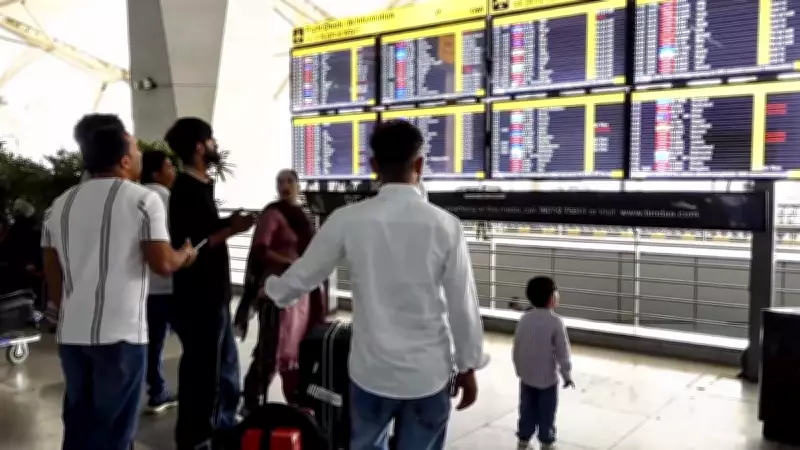
Middle East Conflict Triggers Major Flight Cancellations Across Indian Airports
The intensifying conflict in the Middle East has sent shockwaves through the aviation sector, leading to the cancellation of more than 100 flights at two of India's busiest airports: Delhi's Indira Gandhi International Airport and Mumbai's Chhatrapati Shivaji Maharaj International Airport. This significant disruption has left thousands of passengers stranded and scrambling for alternative travel arrangements, highlighting the far-reaching impact of geopolitical tensions on global air connectivity.
Widespread Disruption and Passenger Inconvenience
Airline officials and airport authorities have confirmed that the cancellations are a direct consequence of the escalating military actions in the Middle East region. The affected flights primarily include routes to and from destinations in the Gulf and other parts of the Middle East, which are critical hubs for international travel from India. Passengers have reported receiving last-minute notifications about the cancellations, leading to chaos at airport terminals as they seek rebooking options or refunds.
The scale of the disruption is substantial, with over 100 flights grounded, impacting both domestic and international travel schedules. Airlines have been forced to adjust their operations, citing safety concerns and airspace restrictions imposed due to the conflict. This has not only inconvenienced leisure and business travelers but also disrupted cargo shipments, adding to the economic ramifications of the situation.

Operational Challenges and Safety Measures
In response to the crisis, airport authorities in Delhi and Mumbai have activated contingency plans to manage the surge of affected passengers. Additional staff have been deployed to assist with inquiries and facilitate alternative bookings. However, the sudden nature of the cancellations has overwhelmed resources, leading to long queues and delays in customer service.
Safety remains the top priority for airlines, with many opting to cancel flights preemptively to avoid potential risks associated with the conflict zone. Aviation experts note that such disruptions are common during geopolitical crises, as airlines prioritize passenger and crew safety over operational continuity. The cancellations are expected to continue until there is a de-escalation in the Middle East, with airlines closely monitoring the situation for updates.
Economic and Logistical Implications
The flight cancellations have broader implications for India's aviation industry and economy. Key points include:
- Financial losses for airlines due to grounded aircraft and refund processing.
- Disruption to trade and logistics, affecting timely delivery of goods and services.
- Increased operational costs for airports managing the fallout from cancellations.
- Potential long-term impacts on travel demand to and from the Middle East region.
Passengers are advised to stay in touch with their respective airlines for the latest information on flight statuses and rebooking options. Authorities are urging travelers to plan ahead and consider flexible travel dates until normalcy is restored in air operations.






