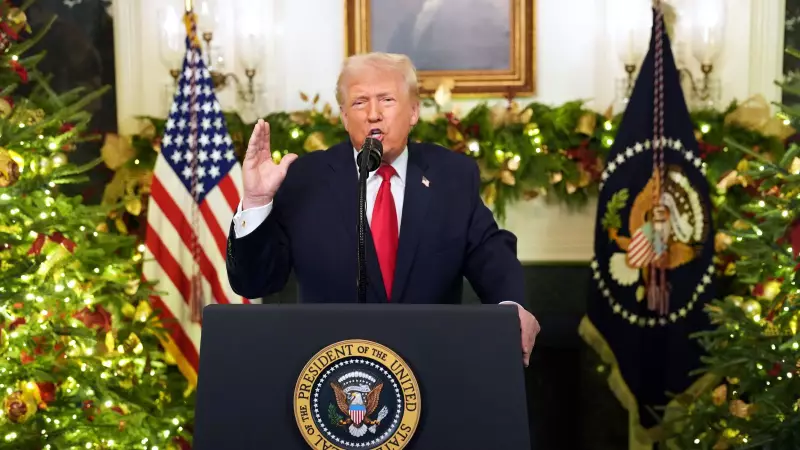
In a sweeping move that marks a significant shift in US foreign policy, President Donald Trump has announced the nation's withdrawal from over 31 international organisations and United Nations bodies. This decision, communicated via a presidential memo, follows a pattern of reducing American financial and diplomatic engagement with multilateral institutions, which the Trump administration argues often work against US national interests.
The Rationale: Countering a 'Globalist Agenda'
The White House issued a statement framing the mass withdrawal as a necessary step to protect American priorities and taxpayer money. The core argument centres on opposition to what President Trump labels a "globalist agenda" pursued by these bodies. The administration contends that the United States has disproportionately funded global organisations, only to find them advancing agendas that do not align with US interests, often perceived as being favourable to rivals like China.
This sentiment echoes the reasoning behind the US exit from the World Health Organisation (WHO) in January 2025. At that time, officials criticised the WHO for a "failure to adopt urgently needed reforms" and alleged undue political influence from member states. They highlighted that China, with a much larger population, contributed nearly 90% less to the agency's budget than the US.

"These withdrawals will end American taxpayer funding and involvement in entities that advance globalist agendas over US priorities," the White House statement declared, adding that the funds would be redirected to more relevant domestic and international issues.
Key Agencies on the Exit List
The scope of the withdrawal is vast, targeting some of the most prominent frameworks for international cooperation. Two of the most significant exits are from critical UN entities focused on climate change and gender equality.
Exit from Global Climate Framework: The US will withdraw from the UN Framework Convention on Climate Change (UNFCCC), the foundational treaty for global climate cooperation that gave rise to the Paris Agreement. Manish Bapna of the Natural Resources Defence Council noted this would make the US the first and only country to leave the UNFCCC, isolating it from negotiations that shape massive economic policy. This move follows a trend; last year, the US skipped the UN's annual climate summit for the first time in roughly three decades.
Withdrawal from UN Women and UNFPA: The administration also plans to exit UN Women, which promotes gender equality and women's empowerment, and the UN Population Fund (UNFPA), an agency dedicated to family planning and maternal health in over 150 countries. Funding for UNFPA was already severed last year, making the formal withdrawal a subsequent step.
Funding Cuts and Global Strategy
This diplomatic disengagement is coupled with severe financial pullback. President Trump has already cut most voluntary contributions to numerous UN agencies, drastically reducing both American influence and financial support across the UN system. The latest withdrawals will cement this financial detachment from the listed bodies.
Analysts question how the US plans to extend its global influence while retreating from major multilateral platforms. The answer appears to lie in unilateral tools. The Trump administration continues to rely on its primary economic 'weapon'—tariff threats—and its unmatched military power, which was deployed in 2025 for operations in countries including Syria, Iraq, Nigeria, Somalia, Yemen, and Iran.
However, a complete abandonment of the UN is considered unlikely. As per insights cited by France 24, US officials suggest Trump would want to remain part of coalitions that set global standards, especially to counter China's growing influence within the UN Security Council, where it holds veto power. Continued association with bodies like the International Telecommunications Union and the International Maritime Organization is seen as crucial for this strategic competition.

This historic recalibration, occurring in the wake of other aggressive foreign policy actions, signals a US preference for a transactional, power-based international engagement over traditional multilateralism, with uncertain long-term consequences for global governance.