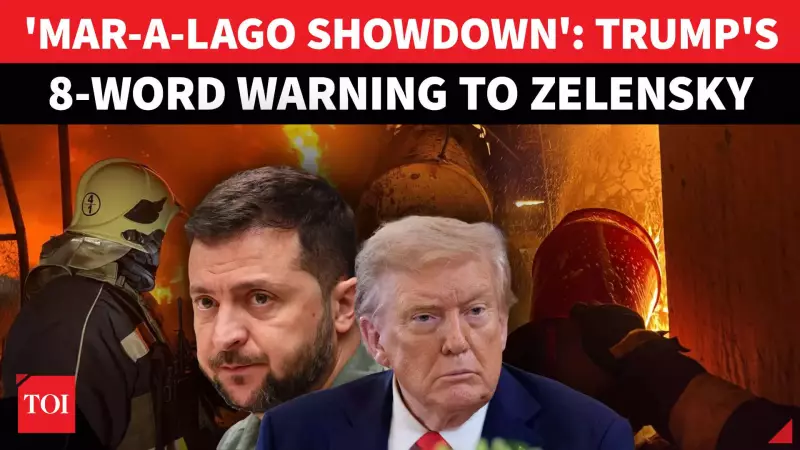
In a dramatic prelude to a critical diplomatic summit, US President Donald Trump has positioned himself as the sole authority who must approve any potential peace agreement between Ukraine and Russia. His stark declaration came just hours before he was scheduled to meet Ukrainian President Volodymyr Zelensky in Florida on December 27, 2025.
Trump's Assertion of Ultimate Authority
Speaking to Politico ahead of the high-stakes talks, President Trump delivered a blunt message regarding Zelensky's diplomatic efforts. He stated that the Ukrainian leader "doesn't have anything until I approve it," effectively claiming veto power over the peace process. This statement sets a confrontational tone for the meeting, where Zelensky intended to present a comprehensive new blueprint to end the nearly four-year-long conflict.
The Ukrainian president's proposed plan is a detailed 20-point framework addressing the war's most contentious issues. Key elements reportedly include provisions for future security guarantees for Ukraine, agreements on territorial control, and the establishment of a demilitarised zone. Despite the plan's scope, Trump pointedly refrained from endorsing it during his interview, casting immediate doubt on its prospects.

The Stakes of the Florida Summit
The timing of this meeting adds immense pressure to the proceedings. Ukrainian and American negotiators are working against a clock, pushing to finalise details before a New Year deadline. This diplomatic urgency unfolds against a backdrop of continued violence, as Russian forces persist in launching attacks on critical Ukrainian infrastructure.
The dynamic places Zelensky in a precarious position. He arrives seeking crucial US support for a peace initiative while simultaneously managing a wartime reality on the ground. Trump's pre-meeting comments suggest the discussion will centre less on the plan's merits and more on the US President's personal approval, a significant shift in diplomatic protocol.
Broader Implications for the War and Diplomacy
This development marks a pivotal moment in international efforts to resolve the Europe's largest conflict in decades. By declaring himself the "ultimate arbiter," Trump has centralised the peace process around his office, potentially sidelining other international actors and established diplomatic channels. The approach signals a potentially unilateral American stance on a conflict that has global ramifications.
The outcome of the Florida meeting will have immediate consequences. A rejection or major alteration of the 20-point plan could delay peace efforts indefinitely, prolonging the humanitarian and economic toll. Conversely, a US endorsement could accelerate negotiations but under terms heavily influenced by Washington's priorities. As both leaders prepare to sit down, the world watches to see whether this will be a step toward peace or a demonstration of raw political power reshaping a international crisis.