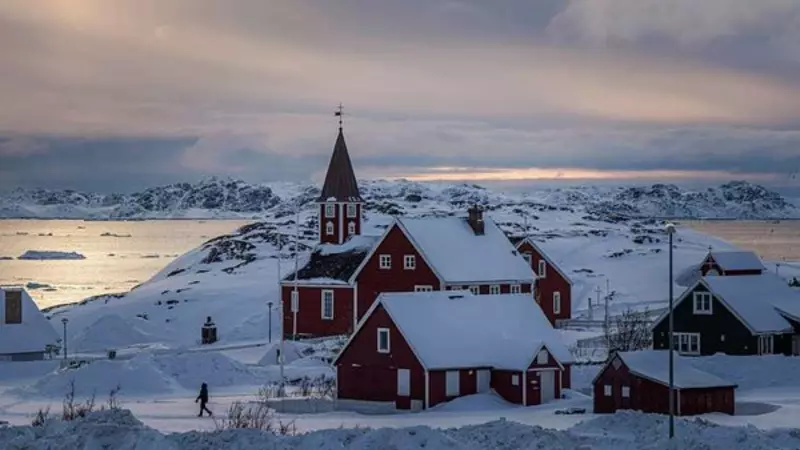
In a striking revival of a controversial idea, former US President Donald Trump has included a plan to purchase Greenland as part of his 2024 election campaign platform. The proposal, which made headlines during his first term, now comes with a new financial sweetener for the territory's residents.
The Million-Dollar Pledge to Greenlanders
According to a report by The Telegraph, Trump's updated plan involves offering a substantial cash payment to every individual living in Greenland. The proposal suggests a payment of $1 million to each of Greenland's approximately 56,000 residents. This financial incentive is a clear attempt to make the idea of a sale more palatable to the local population, who have historically shown strong opposition to such a transfer of sovereignty.
The notion of the United States acquiring Greenland is not a new one. It was first publicly floated by Trump in 2019, an idea that was swiftly and firmly rejected by both the Danish government—which handles Greenland's foreign and defense policy—and the Greenlandic authorities themselves. The proposal was met with widespread ridicule and disbelief at the time, with Denmark's then-Prime Minister Mette Frederiksen calling the idea "absurd."

Geopolitical Ambitions in the Arctic
Trump's renewed interest is driven by more than just real estate ambition. Greenland's strategic location in the Arctic holds immense geopolitical and economic value. As climate change opens new shipping routes and access to vast untapped natural resources, control of the world's largest island becomes a key strategic prize. The region is believed to hold significant deposits of rare earth minerals, essential for modern technology and green energy solutions.
The 2024 campaign pledge underscores Trump's transactional approach to foreign policy and territory. By directly promising cash to citizens, he aims to bypass governmental objections. However, this approach overlooks the complex political realities. Greenland, while part of the Kingdom of Denmark, has its own autonomous government. Any decision of this magnitude would require consent from both Nuuk and Copenhagen, a scenario that remains highly improbable.
Reactions and Realities of the Proposal
The revival of this plan has been met with familiar skepticism. Analysts and political observers see it largely as a campaign trail spectacle designed to generate media attention and reinforce Trump's image as a deal-maker unafraid of grand, unconventional ideas. The practical and legal hurdles are monumental, involving international law, treaties, and the fundamental right to self-determination.
Furthermore, the financial logic of the offer is being questioned. A simple calculation shows that paying $1 million to 56,000 people would cost $56 billion, before even considering the actual "purchase price" for the territory's land and resources. This raises doubts about the proposal's seriousness and economic feasibility.
For Greenland, the offer touches on deep-seated issues of identity and independence. The island has been moving towards greater autonomy from Denmark, and most political forces there aspire to full independence in the long run. Selling to another power would contradict this national trajectory. The local response in 2019 was a firm "not for sale," and there is little indication that public opinion has shifted.
As the 2024 US presidential election heats up, this pledge highlights how Arctic strategy and great-power competition have entered mainstream political discourse. While the likelihood of a sale is virtually zero, the proposal itself signals an ongoing American focus on countering Russian and Chinese influence in the resource-rich polar region. The story of Trump's Greenland bid is less about a real estate transaction and more about the evolving battle for influence at the top of the world.