Exclusive: Trump's Three-Pronged Military Strategy Against Iran Under Review
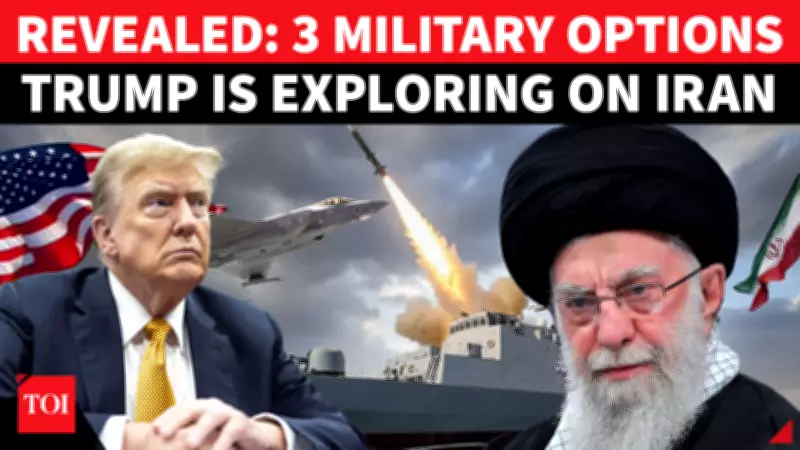
In a highly confidential White House meeting, President Donald Trump was presented with a detailed briefing outlining three distinct military options for potential action against Iran. This revelation comes amid escalating tensions in the Middle East, where the United States has significantly bolstered its military presence in recent weeks.
Three Contingency Plans on the Table
According to multiple intelligence and defense sources, the options presented to the President range from targeted, limited operations to more comprehensive military campaigns. The first option involves precision air strikes focused specifically on Iran's nuclear facilities and ballistic missile development sites. This approach aims to degrade Iran's strategic capabilities while minimizing broader conflict.
The second, more aggressive option would expand targeting to include Iranian regime leadership positions and key military command centers. The third and most extensive option would involve a sustained campaign against not only Iranian military assets but also their regional proxy forces across the Middle East.

Massive U.S. Military Buildup in the Region
Even as these options are being considered, the U.S. military has assembled one of its largest force deployments in the Middle East in years. This substantial buildup includes multiple aircraft carrier strike groups, squadrons of advanced fighter jets, and extensive support aircraft positioned strategically throughout the region.
The military posture serves as both a deterrent and a preparation for potential action, creating what defense analysts describe as a "ready-to-act" force configuration that could execute any of the three options with minimal additional mobilization time.
Diplomatic Channels Remain Active Amid Military Planning
Despite the military preparations, diplomatic efforts continue simultaneously. Talks are ongoing in Geneva and Oman, with international mediators working to de-escalate tensions and prevent open conflict. These parallel tracks of military readiness and diplomatic engagement reflect the complex balancing act facing the Trump administration.
National security advisers are reportedly conducting comprehensive risk assessments for each military option, evaluating potential Iranian retaliation scenarios and the broader implications for regional stability. No final decision has been made, with the administration maintaining what officials describe as a "deliberate and measured" approach to the situation.
Strategic Considerations and Potential Consequences
The decision-making process involves weighing several critical factors:
- Iranian response capabilities: Assessment of Iran's ability to retaliate against U.S. interests in the region and beyond
- Regional escalation risks: Potential for conflict to expand beyond U.S.-Iran confrontation to involve other regional actors
- International reaction: Expected responses from allies, partners, and adversaries to different levels of military action
- Domestic political considerations: Impact on public opinion and congressional support for various military options
This unfolding situation represents one of the most significant national security challenges of the Trump presidency, with implications that could reshape Middle Eastern geopolitics for years to come.