The political landscape of the Western Hemisphere is witnessing heightened tensions following a series of aggressive actions and statements from the administration of US President Donald Trump. These moves have sparked renewed fears, particularly in Canada, about American intentions towards its northern neighbour and the broader region.
From Venezuela to the Arctic: A Pattern of Assertion
The recent New Year's operations in Venezuela, which involved the capture of Venezuelan President Nicolás Maduro, served as a stark demonstration of Washington's willingness for direct intervention. US Secretary of State Marco Rubio's declaration, "This is our hemisphere," to the press underscored the administration's perspective. This sentiment aligns with what analysts are calling the "Trump Corollary" to the Monroe Doctrine, where regional nations are viewed not as sovereign partners but as strategic assets to be secured, potentially through coercive force.
Trump's interest in purchasing Greenland and the recent seizure of a Russia-flagged oil tanker in the North Atlantic, allegedly carrying sanctioned Venezuelan oil, further illustrate this transactional approach to foreign policy. His public threat on Truth Social to cut off Venezuelan oil supply to Cuba adds to the pattern of using economic and military leverage to advance national interests.

Canada in the Crosshairs: The 51st State Fear
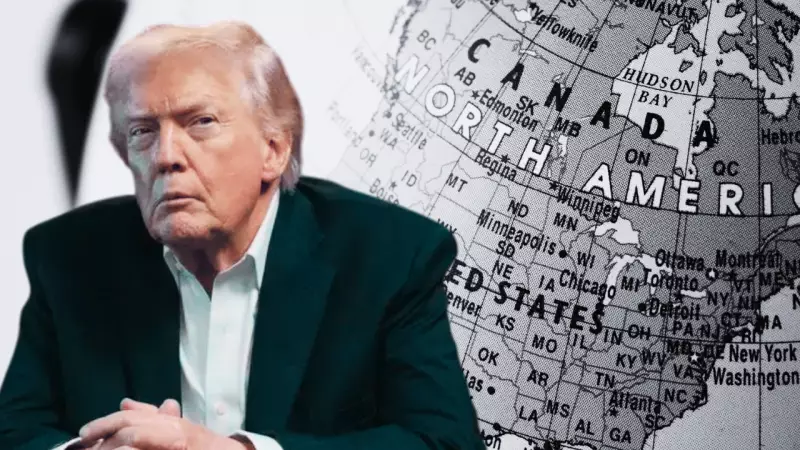
This pattern has directly raised alarm bells in Canada. An editorial in the prominent Canadian news outlet, The Globe and Mail, has highlighted a renewed fear of annexation, suggesting Canada could be targeted to become the "51st state of the US." The authors argue that under the "Trump Corollary," Canada's vast natural resources—including oil, minerals, and water—and its crucial Arctic positioning make it a vital resource hinterland and a target.
"Canadians must acknowledge the real risk that Mr Trump will use military coercion against our country," the editorial stated bluntly. Thomas Homer-Dixon, one of the authors, told Bloomberg, "It’s all about changing the calculus... If there is an attempt to use military coercion against us, it needs to be clear that it’s going to be enormously costly."
A Call for Readiness in Ottawa
Despite the evidence, there appears to be a reluctance in some Canadian official circles to fully confront this new reality. Wesley Wark, a former adviser to the Canadian government on security, noted that many in Ottawa find it hard to believe the situation has deteriorated to this point. However, the editorial writers urge preparedness, concluding that "our neighbour’s autocratic and avaricious leader is demonstrably eager to use his country’s massive military power to advance his interests."
The shared NATO membership between the US and Canada, which Trump has also sought to dominate, adds a complex layer to the security dilemma. The fundamental concern is that the world's longest undefended border may no longer symbolize a line of partnership but could be reinterpreted as a frontier of potential annexation. As the authors starkly warn, "We must get ready."