President Donald Trump has narrowed the search for the next chair of the US Federal Reserve to four finalists, but the selection process is overshadowed by a critical condition: any candidate must precommit to lowering interest rates. This demand, made explicit by Trump in a social media post, fundamentally challenges the traditional notion of an independent central bank.
The Presidential Ultimatum and the Final Four
In a post on Tuesday, December 24, 2025, Trump celebrated strong third-quarter economic growth but lamented market fears of rate hikes. He declared, "I want my new Fed Chairman to lower Interest Rates if the Market is doing well... Anybody that disagrees with me will never be the Fed Chairman!" This statement effectively sets the mandate for his appointee.
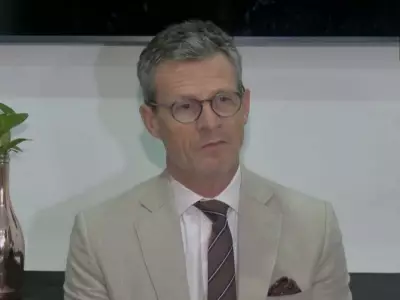
The frontrunners, who have all expressed support for lower rates, include White House adviser Kevin Hassett, former Fed governor Kevin Warsh, sitting Fed governor Chris Waller, and BlackRock executive Rick Rieder. Wall Street consensus suggests Hassett is the favourite, though his proximity to Trump raises concerns about his ability to act independently.

Profiles in Contention: From Hawkish Past to Dovish Present
Kevin Hassett's credentials include a Ph.D. and experience at the Fed and mainstream think tanks. As chair of the Council of Economic Advisers during Trump's first term, he showed flashes of independence, clashing with trade adviser Peter Navarro and defending Fed Chair Jerome Powell. However, since returning as director of the National Economic Council in 2025, his rhetoric has turned more partisan, criticising Powell and federal statistics agencies.
Kevin Warsh, historically known as a hawk on inflation and a critic of quantitative easing, has shifted his stance. Despite not being part of the administration, he has echoed Trump's calls for aggressive rate cuts in 2025, arguing for lower mortgages to stimulate housing. He has also been a harsh critic of Powell.
Chris Waller is viewed as the candidate whose dovish stance is most rooted in consistent economic reasoning, rather than political alignment. Economists find this reassuring, believing he would reverse course if data changed.
The Inescapable Reality: Pressure for Growth Overrules Autonomy
The core issue is that Trump's economic agenda relies on low rates to fuel growth, boost markets, and manage the federal deficit. The new Fed chair will inevitably face immense pressure to deliver, even if economic data eventually argues against further cuts. The question is whether any of the finalists could withstand presidential pressure, including public criticism or threats of removal.
The only central banker known to have stood up to Trump is the current chair, Jerome Powell, which is precisely why he is not being considered for another term. This transition marks a potential turning point where the Fed's operational independence is explicitly traded for alignment with the White House's political and economic goals.