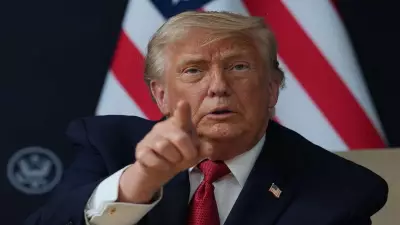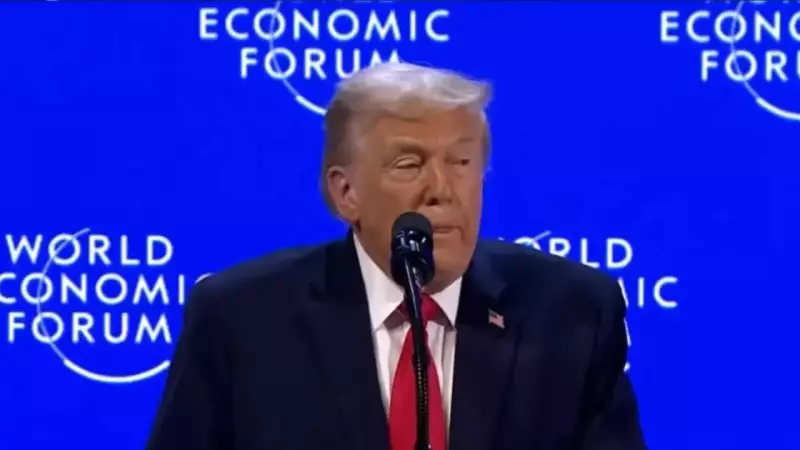
As speculation swirls around potential Republican candidates for the 2028 presidential election, with names like JD Vance and Marco Rubio in the mix, former President Donald Trump has once again captured headlines with a provocative social media post. On his Truth Social platform, Trump mused about pursuing a "fourth term," sending political observers and the internet into a familiar frenzy that blurs the lines between constitutional awareness and classic Trump-style baiting.
The 'Fourth Term' Post That Started It All
In a characteristic all-caps message on Truth Social, Trump declared: "RECORD NUMBERS ALL OVER THE PLACE! SHOULD I TRY FOR A FOURTH TERM?" This remark immediately sparked widespread discussion about its meaning and implications. While Trump has previously teased the unconstitutional idea of serving a third term—and appeared to rule it out last October—this reference to a "fourth" term adds another layer of complexity to his political messaging.
Interpreting Trump's 'Fourth Term' Remark
Political analysts suggest two possible interpretations of Trump's "fourth term" comment. First, it could reference his persistent but false claim that he actually won the 2020 election against Joe Biden, making his current consideration essentially about a "third" term in his view. Alternatively, it might suggest an audacious bid to serve two additional terms beyond his previous presidency. Regardless of interpretation, the 22nd Amendment of the U.S. Constitution explicitly prohibits any person from being elected president more than twice.

Trump's Assessment of Republican 'Bench Strength'
In a separate interview aired on NewsNation's "Katie Pavlich Tonight," Trump acknowledged that the Republican Party possesses "a good bench" of potential candidates for the 2028 presidential race. When asked about successors who could carry on his political legacy, he responded: "I hope so. And we certainly have a good bench. We have some very talented people."
Though Trump admitted having early favorites, he declined to name specific individuals, stating: "I do, but it's so early. You know, I mean, I do actually. But it's so early that it's, you know, I don't like to." When pressed for names during the interview, he offered general praise: "Look, we have great people. You see what's happening. I mean the people that we have in so many—I'm not just talking about one or two—we have so many great people."
Specific Names That Emerged
Trump did reference several prominent figures when prompted further. He mentioned: "Well, JD's been great. Marco has been great. Scott's been great. Everybody's been great," referring to Vice President JD Vance, Secretary of State Marco Rubio, and Treasury Secretary Scott Bessent. He also praised his border czar Tom Homan and Homeland Security Secretary Kristi Noem, saying: "Look at Tom Homan and Kristi, the job they've done with security." Trump concluded by asserting he could "name 20 people that are phenomenal," highlighting what he perceives as considerable depth in Republican leadership.
Constitutional Reality Check: The 22nd Amendment
The fundamental question remains: Can Trump actually run for a fourth term? The answer is unequivocally "No" according to the 22nd Amendment. This constitutional provision states: "No person shall be elected to the office of the President more than twice, and no person who has held the office of President, or acted as President, for more than two years of a term to which some other person was elected President shall be elected to the office of the President more than once."
Is Constitutional Change Possible?
While theoretically possible, amending the Constitution to allow a third or fourth term would be extraordinarily difficult. Section 2 of the 22nd Amendment specifies that any change would require ratification by three-fourths of state legislatures within seven years of congressional submission—a high political barrier that makes such modification unlikely in the current political climate.

Political Context and Republican Challenges
This discussion occurs as Republicans prepare for the 2026 midterm elections following recent electoral setbacks. A new Emerson College poll shows Democrats leading a hypothetical race with 48.1% support compared to the GOP's 41.7%, with 10.2% undecided. Trump acknowledged these challenges but downplayed expectations, telling Fox News earlier this month that the president's party "always loses" midterm elections—a historical pattern he referenced to contextualize current Republican concerns.
Trump's "fourth term" tease, while constitutionally impossible, serves multiple political purposes: it keeps him in the news cycle, tests public reaction to his continued political ambitions, and subtly influences the conversation around potential 2028 successors. As the Republican Party navigates its post-Trump future while the former president remains its dominant figure, these carefully calibrated remarks continue to shape the political landscape in ways that blend spectacle with substantive discussion about America's democratic institutions.