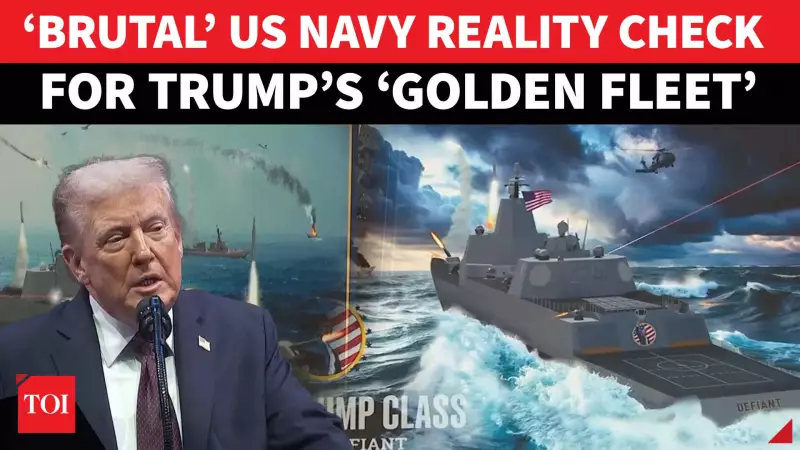
In a bold move that harks back to the naval giants of the Second World War, U.S. President Donald Trump has announced ambitious plans for a new 'Golden Fleet,' centered on colossal 'Trump-class' battleships. Unveiled on December 23, 2025, the vision promises unmatched maritime firepower but has immediately ignited intense debate over its staggering cost and practical feasibility.
The Vision: A Return to Battleship Supremacy
The proposed 'Trump-class' vessels are designed to be the most powerful surface combatants afloat. According to the announcement, each battleship would be armed with hypersonic nuclear-capable missiles and extensive launch systems, a capability intended to project unprecedented power across the world's oceans. The scale of these ships is said to be unseen since the era of World War II, marking a dramatic shift from current naval design philosophies that favor smaller, more numerous vessels.
The Staggering Price Tag and Mounting Concerns
However, this vision of restored dominance comes with an eye-watering financial burden. Early estimates suggest each battleship could cost over $15 billion to build. This monumental price point has critics and defense experts sounding the alarm. They argue the plan directly clashes with the U.S. Navy's recent and troubled shipbuilding record, which has been consistently marred by severe delays, budget overruns, and critical workforce shortages in domestic shipyards.

The central fear is whether American industrial capacity can deliver such complex behemoths on time or within the projected budget. Skeptics question if the 'Golden Fleet' is a strategically sound investment or a potential financial black hole that could drain naval finances for decades, ultimately weakening overall readiness rather than strengthening it.
Expert Analysis: A Gamble for Maritime Dominance
Military analysts are deeply divided. Proponents see the battleships as a necessary deterrent in an era of great-power competition, a tangible symbol of American resolve. Detractors, however, view it as a costly anachronism, arguing that modern warfare favors distributed networks of submarines, aircraft, and smaller, stealthier ships over single, high-value targets like massive battleships.
The debate extends beyond mere cost. It touches on the very future of naval warfare, industrial policy, and strategic prioritization. The success or failure of President Trump's 'Golden Fleet' proposal will hinge not just on funding, but on overcoming the systemic shipbuilding challenges that have plagued the U.S. for years. The world will be watching to see if this bold plan becomes a reality or remains a controversial and expensive blueprint.