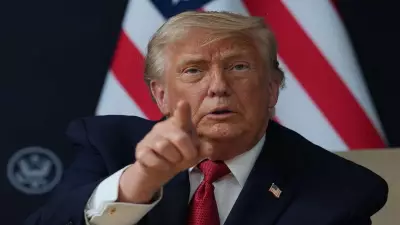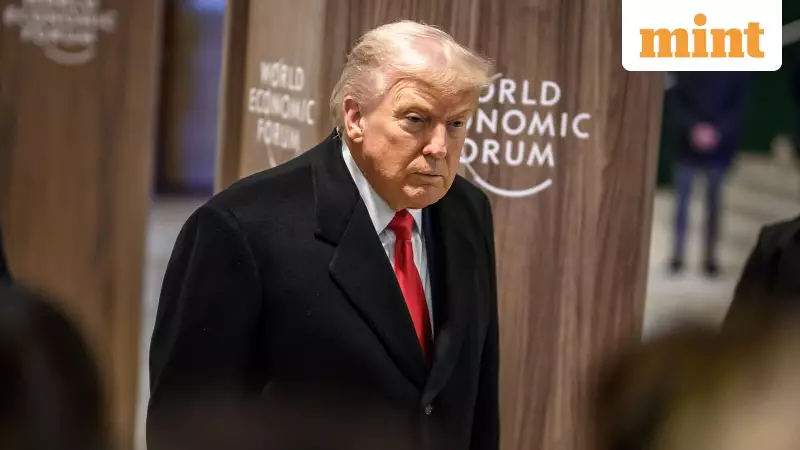
US President Donald Trump's recent address at the World Economic Forum in Davos has sent shockwaves through the North Atlantic Treaty Organization, exposing significant fault lines within the alliance and raising profound questions about its future viability. The President's remarks concerning Greenland have placed NATO on a precarious brink, testing the very foundations of trans-Atlantic security cooperation that has endured for decades.
The Davos Speech and Its Immediate Aftermath
President Trump's speech at Davos was closely monitored as a critical indicator for the future of trans-Atlantic relationships, particularly regarding NATO's cohesion. While the alliance appears to have survived this latest challenge, its resilience has been severely tested, leaving many to wonder about its long-term stability.
Understanding NATO's Historical Context
The North Atlantic Treaty Organization was established in 1949 as a defensive alliance against Soviet expansion and communist influence. Originally comprising twelve founding members including the United States, Canada, and several European nations, NATO has expanded significantly over the decades. Recent additions like Finland in 2023 and Sweden in 2024 were directly prompted by Russia's aggression in Ukraine.

The cornerstone of NATO remains Article 5 of the Washington Treaty, which establishes that an armed attack against one member shall be considered an attack against all. This principle was famously invoked following the September 11, 2001 terrorist attacks, leading to multinational military operations in Afghanistan.
Trump's Longstanding Criticisms of NATO
President Trump has consistently demonstrated skepticism toward multilateral institutions, with NATO being a particular focus of his criticism. His primary concern revolves around financial burden-sharing, arguing that the United States bears disproportionate costs for European security while other members contribute relatively less.
During his first presidential term, Trump pushed NATO members to increase defense spending to 2% of their GDP. In his current term, he has escalated these demands, calling for contributions to reach 5% of GDP. At Davos, he explicitly questioned what benefits the United States derives from NATO beyond protecting Europe from Russian threats.
The Greenland Gambit as Symbolic Payback
Within this context, Trump's interest in acquiring Greenland from Denmark has taken on symbolic significance. The President appears to view this potential acquisition as compensation for what he perceives as years of American overinvestment in European security through NATO.
At Davos, while clarifying that he would not pursue annexation by force and avoiding mention of previously threatened punitive tariffs, Trump delivered an unmistakable warning to Denmark: "You can say yes, and we will be very appreciative, or you can say no, and we will remember." He later indicated he was seeking negotiations rather than confrontation.
Why Greenland Matters Strategically for NATO
A unilateral American military move against Greenland would have catastrophic implications for NATO's fundamental principles. Such action by one member against another would effectively nullify Article 5 and could potentially destroy the alliance entirely.
Europe, despite its economic power and hosting of numerous US military bases, remains heavily dependent on American nuclear protection for its security. This dependence persists despite the presence of nuclear-armed members like the United Kingdom and France. The United States has played a decisive role in countering Russian nuclear threats during the ongoing Ukraine conflict, further highlighting European reliance.
While Europe could theoretically impose economic sanctions on the United States in response to aggressive actions, Trump's unpredictability creates uncertainty about Washington's cooperation in future NATO crises, leaving European security vulnerable.
The Dangerous Precedent Being Set
Forcing Denmark to cede Greenland would constitute a clear violation of national sovereignty. More troublingly, it remains uncertain whether such demands would stop with Greenland, potentially opening the door to further coercive actions against NATO allies.

This situation raises difficult questions about global security architecture. How can the United States or Europe effectively pressure Russia regarding Ukraine or address China's actions toward Taiwan if a nuclear power can coerce a NATO ally without facing meaningful consequences? The primary beneficiaries of this NATO crisis appear to be America's strategic competitors, particularly Russia and China.
Could Europe Have Prevented This Crisis?
European nations have had decades to reduce their military dependence on the United States. The Balkan conflicts of the 1990s highlighted this dependency, which was ultimately resolved through substantial American intervention.
While the European Union established its Common Security and Defence Policy between 1999 and 2000, and has undertaken limited military operations such as France's intervention in Mali and the EU's naval Operation Atalanta against piracy, these efforts have remained constrained in scope and ambition.
The Ukraine war has exposed significant gaps in Europe's security capabilities. Despite possessing economic strength, technological sophistication, a robust military-industrial base, and nuclear powers within its ranks, Europe has failed to develop fully independent military capacity. Demographic challenges could have been addressed through technological solutions like drone warfare, but comprehensive capability development has lagged.
Trump's actions have delivered a stark reality check to European security planners. While this crisis may ultimately push Europe toward greater strategic autonomy, building such capabilities will require substantial time and investment, leaving the continent vulnerable in the interim.