

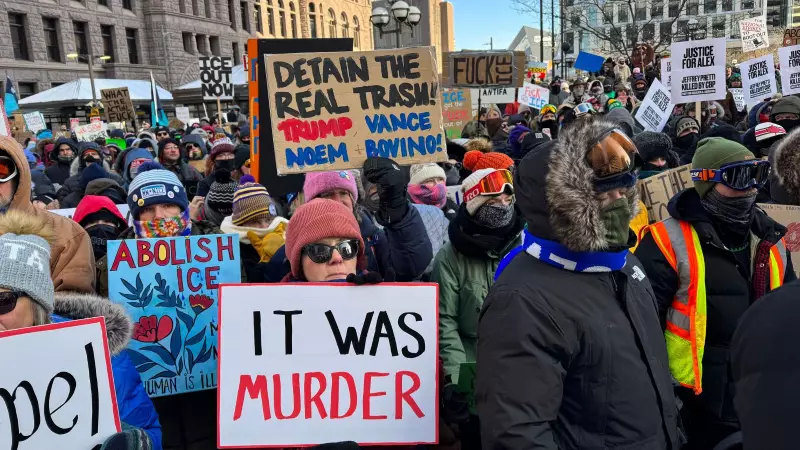
Trump's ICE Crackdown Sparks Outrage, But Democratic Opposition Remains Limited
The recent escalation of Immigration and Customs Enforcement (ICE) operations under Donald Trump's administration has generated significant public concern and condemnation. Reports indicate that thousands of individuals are being apprehended across American cities, with agents conducting operations in unmarked vehicles and without proper warrants.
Public Sentiment and Political Response
Public approval ratings for ICE have declined substantially since Trump assumed office, with a majority of Americans now expressing disapproval of the agency's methods. Trump's personal popularity has also reached unprecedented lows. Despite this growing public discontent, the Democratic Party has not launched a comprehensive campaign to challenge these policies.
This limited opposition stems from a historical context where immigration enforcement has often received bipartisan support. Both major political parties have contributed to the development and funding of immigration control mechanisms over multiple administrations.

Democratic Control and Policy Options
The Democratic Party currently holds significant political power across various levels of government. They control gubernatorial offices and legislative majorities in sixteen states and occupy mayoral positions in sixty-seven of the nation's one hundred largest cities. Many of these urban centers have experienced particularly aggressive ICE operations.
Local Democratic leaders possess multiple policy tools to resist federal immigration enforcement. They could terminate all collaboration with ICE agencies, pass emergency legislation prohibiting data sharing between local departments and federal immigration authorities, and implement penalties for non-compliance. Additionally, they could ban law enforcement officers from wearing masks during operations and use their public platforms to organize mass protests.
Historical Context of Deportation Policies
The current immigration enforcement approach represents a continuation of policies implemented across multiple administrations. During Joe Biden's presidency, deportations and border expulsions reached approximately 4.4 million, exceeding numbers recorded during any single presidential term since George W. Bush's second administration.
Barack Obama's eight-year tenure saw over three million deportations, a figure that surpassed the combined total of all twentieth-century presidents and earned him the nickname "Deporter-in-Chief" among immigration advocates.
Systemic Factors and Economic Considerations
Immigration enforcement policies exist within broader economic and political systems. The marginalization of immigrant workers through lower wages and constant deportation threats creates divisions within the working class and establishes lower standards for wages and working conditions across industries.
This dynamic pits native-born workers against immigrant workers in competition for increasingly scarce resources and employment opportunities, ultimately benefiting corporate interests by maintaining a divided labor force.
Calls for Action and Alternative Approaches
Advocates emphasize the need for international working-class solidarity to counter anti-immigrant policies. They propose mass protests, peaceful civil disobedience, and strike actions as necessary responses to current enforcement measures.
Historical precedents exist for such resistance, including the 2017 SeaTac airport shutdown that protested Trump's initial travel ban. Supporters argue that working people must organize to achieve policy changes including universal healthcare funded by wealth taxes, national rent control measures, increased minimum wages, and restrictions on military aid.
The current political landscape reveals complex dynamics where immigration enforcement receives support across party lines, despite growing public opposition to specific implementation methods. This situation highlights the challenges facing immigration reform advocates and the structural factors influencing policy decisions.






