

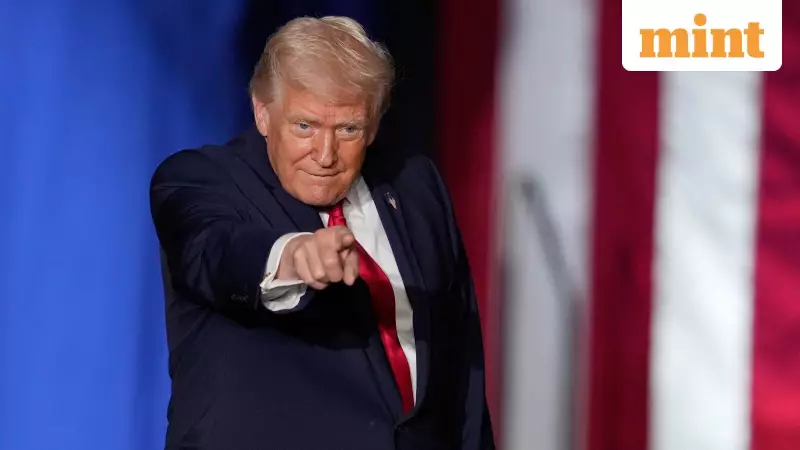
In a campaign-style rally held in Clive, Iowa, US President Donald Trump has once again reaffirmed his administration's tough and uncompromising approach toward Iran. The president highlighted a strategic mix of military pressure and openness to negotiations with Tehran, addressing the ongoing tensions that have been escalating due to the crackdown on protesters and broader regional security concerns.
Military Posturing and Diplomatic Signals
During his speech, President Trump made pointed references to US military deployments in the region, stating, "By the way, there's another beautiful armada floating beautifully toward Iran right now. So we'll see. I hope they make a deal. I hope they make a deal. They should have made a deal the first time. They'd have a country." This statement underscores the dual nature of his policy: maintaining a strong military presence while keeping the door open for diplomatic engagement.
In a separate interview with Axios, Trump elaborated further, noting, "We have a big armada next to Iran. Bigger than Venezuela," and added that officials in Tehran have repeatedly signaled a willingness to engage. "They want to make a deal. I know so. They called on numerous occasions. They want to talk," he said, suggesting that despite the hard-line stance, there are ongoing backchannel communications.

Background of Maximum Pressure Campaign
The president's current hard-line position is deeply rooted in his first-term decision to withdraw the United States from the 2015 nuclear deal. This move was followed by the launch of a "maximum pressure" campaign, designed to cripple Tehran through a series of stringent economic sanctions. This strategy has significantly impacted Iran's economy, with the country's currency, the rial, plunging to a record low of 1.5 million to the dollar, as reported in recent financial updates.
Regional Military Developments and Gulf Allies' Stance
Recent developments have seen a U.S. aircraft carrier strike group arriving in West Asia, spearheading any potential American military response to the ongoing crisis. The deployment of the USS Abraham Lincoln aircraft carrier, along with its accompanying guided-missile destroyers, provides the United States with a formidable capability to strike Iran if deemed necessary.
However, this military buildup faces limitations as Gulf Arab states, despite hosting U.S. forces, have indicated they do not want to be drawn into any attack on Iran. This stance potentially restricts Trump's options, as these allies play a crucial role in regional security dynamics and logistical support.
Iran-Backed Militias and Regional Reactions
Amidst these tensions, two Iran-backed militias in the region have signaled their readiness to launch fresh attacks, apparently in support of Tehran. This comes in response to Trump's threats of military action over the killing of peaceful protesters or potential mass executions following the demonstrations.
The Lebanese militant group Hezbollah, one of Iran's staunchest allies, has maintained a cautious stance. Hezbollah leader Sheikh Naim Kassem, in a video address, addressed questions about the group's potential intervention: "During the past two months, several parties have asked me a clear and frank question: If Israel and America go to war against Iran, will Hezbollah intervene or not?" He stated that the group is preparing for "possible aggression and is determined to defend" against it, but specifics on their actions would be determined by the evolving battle circumstances and strategic interests.
The situation remains fluid, with the interplay of military posturing, economic pressures, and diplomatic overtures shaping the complex landscape of US-Iran relations. As tensions persist, the international community watches closely, aware that any miscalculation could have far-reaching consequences for regional stability and global security.






