

Trump's Military Campaign Against Iran: A Complex Web of Strategy and Propaganda
Former President Donald Trump, often self-proclaimed as the "greatest of all time" leader of the United States, has been publicly celebrating the destructive impact of American military operations against Iran, which he frequently labels as an "evil empire." Despite significant losses inflicted upon Iran—including the reported death of Supreme Leader Ali Khamenei, substantial damage to its navy, and destruction of much of its Air Force—the nation has refused to submit to Trump's demand for an unconditional surrender.
Iran's Defiance and the Kharg Island Strike
In a bold act of resistance, Tehran appointed Mojtaba Khamenei, the 56-year-old hardline son of the late leader, as its new head. This move was accompanied by efforts to disrupt the global economy through oil supply constraints and aggressive diplomatic maneuvers aimed at ending the conflict. In response, Trump authorized the United States Central Command to execute what he described as "one of the most powerful bombing raids in the history of the Middle East," targeting military installations on Kharg Island, a critical hub for Iran's oil exports.
Trump declared on Truth Social that he had chosen not to destroy the island's oil infrastructure "for reasons of decency," but issued a stern warning: any interference with shipping through the Strait of Hormuz would prompt an immediate reconsideration of that decision. This strike represents a significant blow to Tehran's economic and military capabilities, highlighting the intensity of the ongoing conflict.

Global Oil Market Dynamics and Controversial Moves
Amid reports that Russia, under President Vladimir Putin, provided intelligence to Iran about U.S. military targets, Trump made a surprising decision to lift sanctions on Russian oil shipments for 30 days. This move was intended to alleviate pressure on the global oil market but drew sharp criticism from European leaders, who argued it would financially benefit Russia despite ongoing penalties related to its invasion of Ukraine.
Shortly before this, Trump announced a historic $300 billion deal with India's Reliance to establish what he called "the cleanest refinery in the world" in Brownsville, Texas. This agreement underscores the intertwining of economic and military strategies in his approach to the Iran conflict.
Propaganda Efforts and Public Backlash
To garner support for the war, the White House released a series of meme-style videos blending military footage with pop culture references, including scenes from video games like Grand Theft Auto, movies such as "Tropic Thunder" and "Braveheart," and even the cartoon "SpongeBob SquarePants." These videos, which generated over 2 billion impressions according to the administration, faced backlash from individuals featured in them, including NFL players and actor Ben Stiller, who condemned their use in propaganda.
Trump's press secretary defended the strategy as part of a successful media campaign, emphasizing its role in highlighting the U.S. military's successes against Iran. However, the war has come at a high cost, with Pentagon estimates indicating at least $11.3 billion spent on munitions alone in the first six days, though Trump has been vague about defining victory or whether regime change is a goal.
Satirical Art and Political Commentary
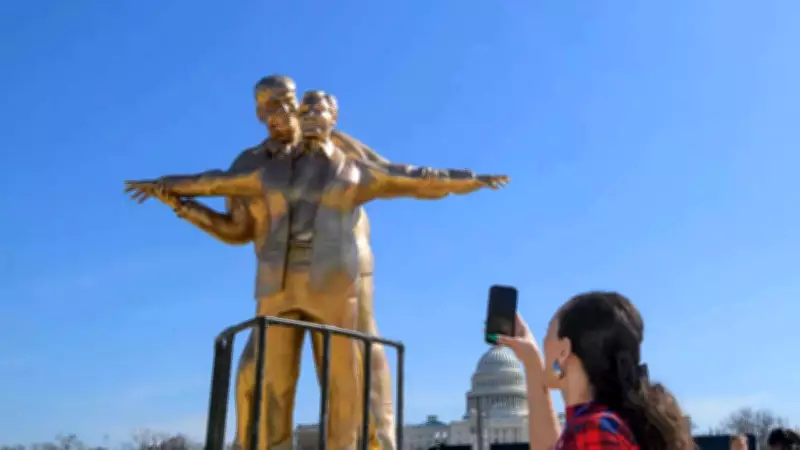
Adding to the controversy, a satirical statue titled "King of the World" was placed on the National Mall by an anonymous artist collective, The Secret Handshake. The 12-foot installation depicts Trump and convicted sex offender Jeffrey Epstein as characters from the movie "Titanic," with plaques mocking their past association. The White House condemned the display, but it serves as a reminder of the persistent public scrutiny and artistic criticism faced by political figures, even amid military conflicts.
Trump continues to assert that the U.S. has "won" in many ways against Iran, yet he emphasizes the need to "finish the job," reflecting the ongoing and unresolved nature of the war. His statements and actions reveal a complex interplay of military force, economic maneuvering, and propaganda in a conflict that continues to shape global politics and oil markets.






