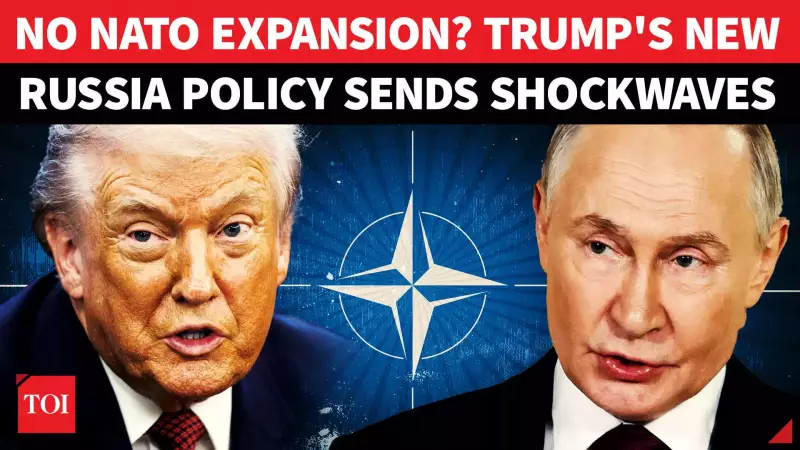
In a move that has sent shockwaves through global diplomatic circles, the United States has announced a radical overhaul of its approach towards Russia and European security. The Trump administration, on December 6, 2025, released a 33-page national security vision that prioritises achieving peace with Moscow and demands an immediate end to the conflict in Ukraine.
A Stunning Strategic U-Turn
The newly unveiled strategy document marks a profound departure from decades of American post-Cold War policy. Its core directives represent a fundamental reset. The plan explicitly calls for halting the further expansion of the NATO military alliance, a long-standing red line for Russian President Vladimir Putin. Furthermore, it urges European nations to take primary responsibility for their own defence, signalling a potential reduction in America's traditional security umbrella over the continent.
Central to this new vision is the goal of restoring "strategic stability" with Moscow. The White House rationale, as outlined, argues that direct U.S. national interests are now best served by rapid diplomacy to stabilise Europe and prevent any further escalation of hostilities. This stance directly challenges the previous administration's policy of robust support for Ukraine and containment of Russian ambitions.

Geopolitical Repercussions and Global Reaction
The immediate international reaction has been one of alarm and sharp criticism from several U.S. allies. Many European capitals and foreign policy analysts view the strategy as effectively handing President Putin a major geopolitical victory without securing concrete concessions. Critics argue that freezing NATO's borders and pushing for a quick peace in Ukraine could legitimise Russia's territorial gains and undermine the security architecture that has defined Europe since World War II.
The policy shift raises urgent questions about the future of international alliances and the balance of power. Key implications include:
- European Defence Autonomy: NATO members in Europe are now under pressure to significantly increase their own military spending and coordination.
- Ukraine's Position: The call for an immediate end to the war places Kyiv in a difficult negotiating position, potentially forcing difficult compromises.
- Global Signal: Other world powers, particularly China, are closely watching this recalibration of American commitment to its traditional allies.
An Uncertain Road Ahead
While the Trump administration frames this move as a pragmatic step towards de-escalation and focusing on American priorities, the path forward is fraught with complexity. The 33-page document sets a new direction, but its implementation will depend on the reactions from Moscow, European resistance, and domestic political debate within the United States. This stunning policy shift ensures that the dynamics of US-Russia relations and European security will dominate global headlines for the foreseeable future, marking one of the most significant strategic turns of the early 21st century.