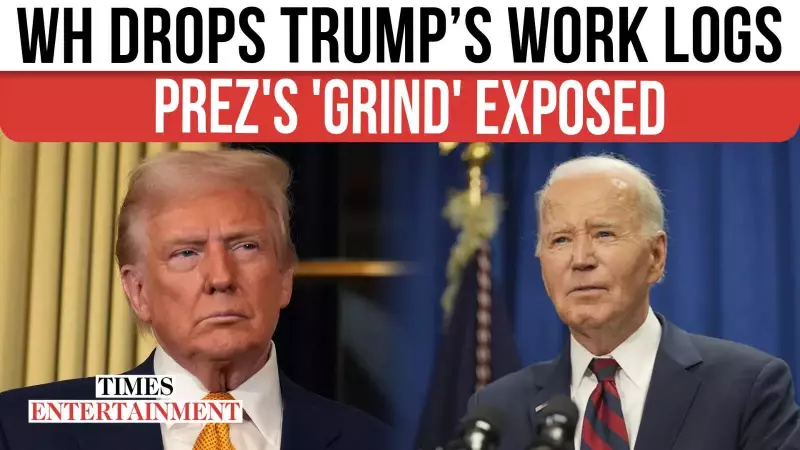
The political spotlight has turned to the work ethics of the two most recent US Presidents, following the release of detailed White House schedules. The documents, made public recently, paint a picture of a gruelling routine for former President Donald Trump, even as current President Joe Biden faces intense criticism over the amount of time he has spent away from the Oval Office.
A Glimpse into Trump's Demanding White House Routine
Newly released logs from Donald Trump's tenure have raised eyebrows for their intensity. Contrary to questions about his stamina raised by publications like The New York Times, the schedules reveal a commander-in-chief keeping a relentless pace. The records detail work weeks stretching to 50 hours, filled with back-to-back, marathon meetings and a series of late-night official events. This data offers a concrete look at the day-to-day demands Trump placed on himself during his presidency, showcasing a work marathon that defies the narrative of a lax schedule.
Biden's Presidency and the Mounting 'Vacation' Criticism
The timing of this revelation is particularly striking, as it coincides with a growing wave of backlash against President Joe Biden. Critics and political opponents have accused Biden of taking an excessive amount of time off, with some reports sensationalizing it as "48 years' worth of vacation" during his time in office. This comparison has ignited a fresh debate about presidential diligence, health, and the public perception of how the nation's top executive spends their time. The contrast between the two narratives—one of non-stop activity and another of frequent leisure—has become a focal point in the ongoing political discourse.

Unpacking the Motives and the Fallout
The decision by Trump's team to publish these detailed work logs is seen by many as a strategic move. It appears designed to directly counter ongoing scrutiny about his age and fitness for office, while simultaneously drawing a sharp contrast with his successor. The debate now centres on several key questions:
- What constitutes a fair measure of a president's work ethic?
- Is a packed schedule indicative of effective governance?
- How does public perception of a leader's stamina influence political fortunes?
This development, emerging in December 2025, has successfully shifted conversation towards a tangible comparison of presidential workloads. It has moved beyond speculation to a fact-based discussion, albeit one that remains deeply politicized. The release of the schedules ensures that the topic of presidential health and capability will remain at the forefront as the next election cycle approaches.