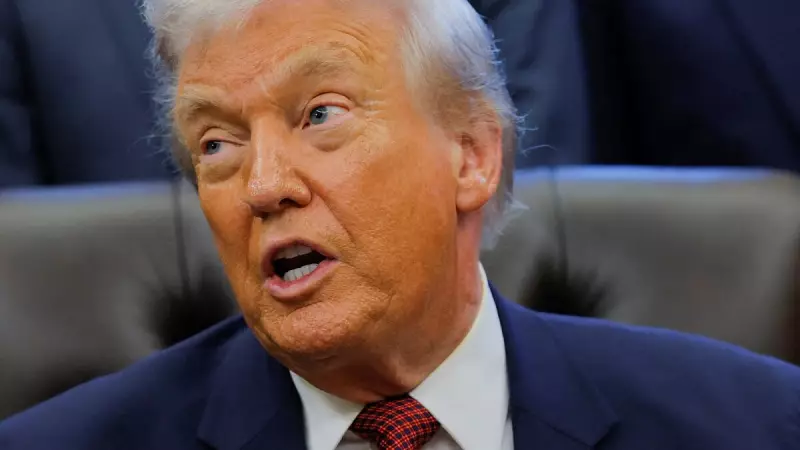
In a significant move preceding a landmark diplomatic event, the name of US President Donald Trump has been officially added to the board of the United States Institute of Peace (USIP). This development comes just ahead of the formal signing of a historic peace agreement between Israel and two Gulf nations, the United Arab Emirates (UAE) and Bahrain.
A Symbolic Gesture Ahead of a Diplomatic Milestone
The decision to include President Trump's name on the USIP board is widely seen as a symbolic acknowledgment of his administration's role in brokering the recent normalization agreements between Israel, the UAE, and Bahrain. These pacts, collectively known as the Abraham Accords, mark a dramatic shift in Middle East diplomacy. The formal signing ceremony is scheduled for Tuesday, September 15, 2020, at the White House.
The US Institute of Peace is a federally funded, non-partisan institution established by Congress in 1984. Its primary mission is to promote the peaceful resolution of international conflicts. The addition of the sitting president's name to its board is a rare occurrence, underscoring the perceived importance of the upcoming accords.

The Details of the Abraham Accords
The agreements set to be signed represent a major foreign policy achievement for the Trump administration. For decades, Arab states have largely held a consensus that formal relations with Israel would only be established after the resolution of the Palestinian conflict. The UAE and Bahrain are now breaking from that tradition.
The deal with the United Arab Emirates, announced in mid-August, involves Israel agreeing to suspend its controversial plans to annex parts of the occupied West Bank. In return, the UAE will establish full diplomatic ties, including opening embassies and launching direct flights. Bahrain followed suit shortly after, agreeing to normalize its own relations with Israel.
These accords are expected to foster greater economic cooperation, enhance regional security coordination against common threats, and potentially pave the way for other Arab nations to join. However, the Palestinian leadership has strongly condemned the moves, viewing them as a betrayal of their cause without addressing core issues of statehood and sovereignty.
Implications and Reactions
The inclusion of Trump's name at the US Institute of Peace highlights the administration's framing of these deals as a monumental step toward regional stability. Proponents argue that the accords isolate Iran, create a new axis of cooperation, and demonstrate the effectiveness of Trump's unconventional, deal-centric approach to diplomacy.
Critics, however, caution that while the agreements are historic, they do not address the fundamental Israeli-Palestinian conflict. They warn that sidelining the Palestinians could lead to increased tensions in the long run. The international community remains watchful, with many European and Asian nations cautiously welcoming the reduction of regional hostilities while reiterating support for a two-state solution.
The ceremony at the White House will be attended by Israeli Prime Minister Benjamin Netanyahu, UAE Foreign Minister Sheikh Abdullah bin Zayed Al Nahyan, and Bahrain's Foreign Minister Dr. Abdullatif bin Rashid Al Zayani. The event solidifies a rapidly changing geopolitical landscape in the Middle East, with the United States positioning itself as the central architect of this new alignment.