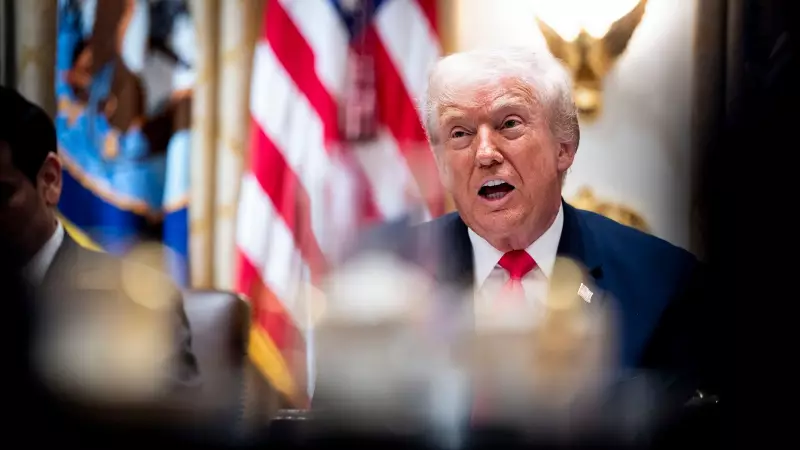
A significant convergence is unfolding in the United States where a long-standing conservative legal strategy aimed at the judiciary meets a bold political maneuver from former President Donald Trump. This intersection involves a project to install conservative judges and a parallel push to radically alter the federal bureaucracy by removing key officials.
The Ambitious Conservative Legal Blueprint
For decades, a concerted effort by conservative groups has sought to reshape the American legal landscape, with the Supreme Court as its crown jewel. This project, championed by organizations like the Federalist Society, has focused on identifying, vetting, and promoting judges with a strict interpretation of the Constitution.
The success of this initiative is evident. The current Supreme Court boasts a 6-3 conservative supermajority, a direct result of this meticulous, long-term planning. Landmark decisions on issues like abortion rights and gun laws have followed, demonstrating the project's profound impact on American life.

Trump's Parallel Push: The "Schedule F" Gambit
Running parallel to this judicial transformation is a political strategy championed by Donald Trump. Central to this is the concept of "Schedule F," a proposed classification for federal employees in policy-making roles.
This plan, which Trump has vowed to reinstate if re-elected, would potentially reclassify tens of thousands of career civil servants. The critical change is that these positions would lose traditional employment protections, making it far easier for a president to fire them and replace them with political loyalists.
The stated goal is to dismantle what some conservatives call the "deep state" or the "administrative state," asserting that a permanent bureaucracy obstructs the agenda of elected leaders. Critics, however, warn this would politicize the non-partisan civil service, erode institutional knowledge, and threaten the stability of government functions.
A Convergence with Profound Implications
The intersection of these two powerful currents—the judicial project and the bureaucratic overhaul—creates a potent scenario for transforming US governance. A Supreme Court shaped by conservative legal philosophy could be more likely to uphold executive actions taken under a revived "Schedule F" authority.
Legal challenges to such firings or to the reclassification itself would inevitably land before the courts, potentially including the Supreme Court. A bench sympathetic to arguments about expansive presidential power over the executive branch could greenlight a sweeping restructuring of the federal workforce.
This potential synergy represents a two-pronged approach: reshaping the judiciary to interpret the law in a certain way, while simultaneously empowering the executive to control the machinery that implements and enforces those laws. It points toward a fundamental shift in the balance of power within the US government.
The implications extend beyond any single administration. It raises critical questions about the independence of the civil service, the limits of presidential authority, and the role of a lifetime-appointed judiciary in refereeing these conflicts. As the 2024 election approaches, this convergence of legal strategy and political ambition remains a focal point for debates about the future of American democracy and governance.