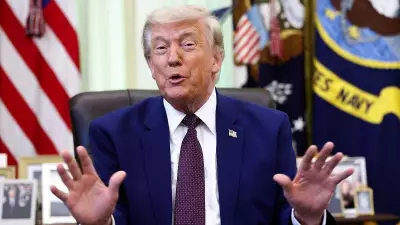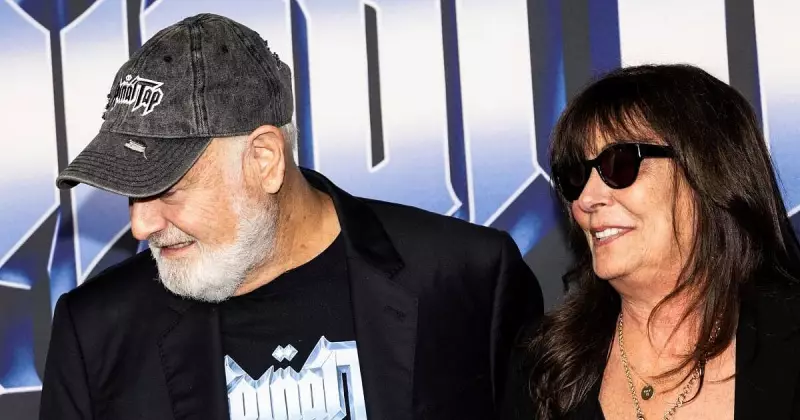
Former US President Donald Trump has ignited a fresh political firestorm with a social media post targeting filmmaker Rob Reiner following news of his death. The attack, which occurred on December 16, 2025, prompted immediate and widespread condemnation, even from within his own political circle.
The Controversial Post and Immediate Fallout
Trump published the contentious remark on his Truth Social platform, under the handle @realDonaldTrump. While the exact wording of the post is not detailed in the source, its nature was severe enough to trigger an instant and furious backlash. The criticism was notably amplified because it came in the sensitive aftermath of another tragic event: the assassination of conservative commentator Charlie Kirk.
The timing of Trump's attack on Reiner was seen as particularly damaging by several Republican allies. They argued that it directly contradicted and weakened the party's recent unified calls for political civility and toned-down rhetoric following the violent attack on Kirk. This internal criticism highlights a significant rift regarding public discourse strategy within the GOP.

Undermining Calls for Unity
The core of the backlash stems from the perceived hypocrisy. After Charlie Kirk's shooting, many Republican leaders, potentially including Trump himself, had appealed for a more respectful and less inflammatory political environment. Trump's subsequent post targeting a deceased political opponent, Rob Reiner, was viewed by critics as a blatant violation of that very principle.
This sequence of events, reported by the International New York Times, places Trump at the center of a debate about consistency and leadership. The outrage underscores the ongoing tension within American politics, where calls for unity often clash with aggressive partisan rhetoric. The incident demonstrates how a single social media post can swiftly derail a carefully constructed political narrative and alienate close supporters.
Broader Implications for Political Discourse
The fallout from Trump's comment extends beyond immediate political point-scoring. It raises serious questions about the sustainability of civility pledges in a highly polarized digital age. When key figures fail to adhere to their own appeals for decorum, it erodes public trust and can further coarsen political dialogue.
The event, dated December 16, 2025, serves as a case study in how personal attacks and heated rhetoric can complicate broader strategic messaging. For observers in India and globally, it highlights the volatile nature of modern political communication, where online statements have real-world diplomatic and social consequences. The lasting impact will be whether this incident leads to a recalibration of rhetoric or simply fades as another episode in a contentious political landscape.