The stage is set for the grand unveiling of the 2026 FIFA World Cup, but the political shadow of former President Donald Trump is already a defining feature of the tournament's build-up. The official draw for the 48-team extravaganza kicks off on Friday at the Kennedy Center in Washington D.C., with Trump expected to share the spotlight with FIFA President Gianni Infantino.
A Delicate Diplomatic Dance
The plans for next summer's unprecedented sporting event, spanning 16 cities across the U.S., Canada, and Mexico, have been in motion for nearly a decade. However, the unpredictable nature of American politics has added a complex layer to the preparations. Infantino's recent Oval Office visit last month was one of several regular check-ins with Trump, underscoring the importance FIFA places on this relationship for the success of the world's largest sporting undertaking.
The tournament's sheer scale is staggering. Organizers anticipate over 1.2 million international fans will descend on North America for the month-long competition. Yet, logistical challenges were unexpectedly compounded when Trump, facing cameras, suggested stripping games from Boston due to his displeasure with the city's Democratic mayor. "If somebody is doing a bad job and if I feel there’s unsafe conditions," Trump stated, "I would call Gianni, the head of FIFA, who’s phenomenal, and I would say, ‘Let’s move it to another location.’"

While FIFA has firmly stated that no venue changes are being considered, the public remark served as a potent reminder that Trump's influence will be a constant factor through to the final next July.
Cultivating an Unlikely Alliance
For FIFA, this World Cup was envisioned as a straightforward, commercially secure event following the controversial editions in Russia (2018) and Qatar (2022). Instead, Infantino has embarked on an unprecedented diplomatic mission to keep the tournament's most powerful stakeholder content. This effort extends to the granular details of Friday's draw ceremony, where reports indicate FIFA has hired the Village People—the band Trump famously dances to at his rallies—to perform.
The public camaraderie between the Swiss lawyer and the former U.S. president is well-documented. Infantino has attended Trump's presidential inauguration as a guest and was present in Egypt when Trump announced a Middle East ceasefire deal. "I have a great relationship with President Trump, where I consider him a really close friend," Infantino said in Miami last November. "He has such incredible energy... He actually says what many people think as well, but maybe don’t dare to say."
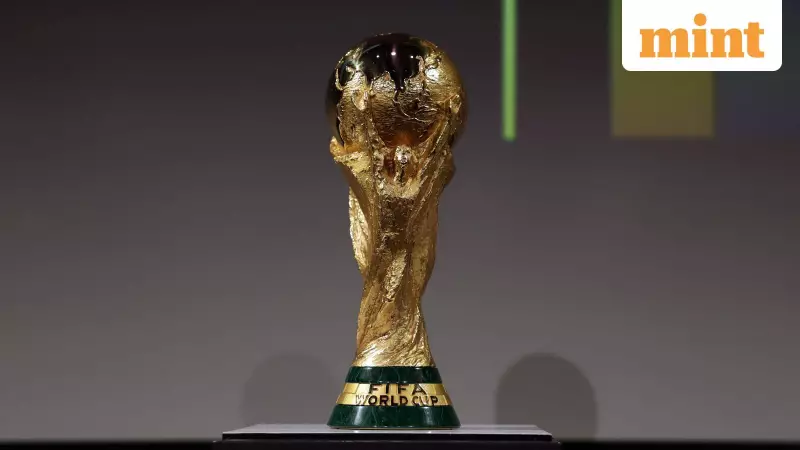
Inside FIFA, supporters of Infantino's approach argue that a strong bond between the tournament organizer and the host nation's leader is pragmatic and essential for a smooth event. A replica of the World Cup trophy now sits behind the desk in the Oval Office, symbolizing this partnership.
Potential Roadblocks and Political Prizes
Despite the warm words, Trump's policies have directly created hurdles for the World Cup. An executive order restricting entry from several countries has left qualified nations like Iran and Haiti in a precarious position. Their fans, journalists, and support staff may face significant barriers to attending. The Iranian football federation has already announced a boycott of Friday's draw after several delegation members were denied U.S. visas. Neither FIFA nor the White House has clarified if exemptions will be granted before next summer.
FIFA has meticulously avoided criticizing the U.S. government on these matters. Instead, the tone remains celebratory and conciliatory. In a notable move last month, Infantino announced the creation of the first annual FIFA Peace Prize, to be awarded at the draw event in D.C. The prize aims to recognize those who work to end conflicts. While not officially confirmed, it is widely anticipated that the inaugural recipient of this award will be Donald Trump himself, a gesture that would further cement the alliance at a critical juncture.

As the global football community turns its eyes to Washington for the draw, the narrative is clear. The 2026 World Cup is not just a sporting festival; it is a high-stakes exercise in diplomacy, where the game's global governor must carefully navigate the political landscape of its most influential host to deliver on the promise of the beautiful game's biggest show.