

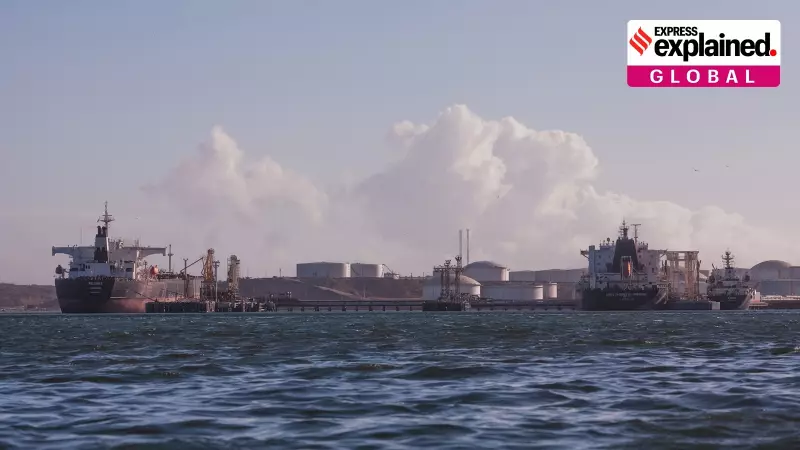
In a dramatic escalation of Washington's long-running pressure campaign against the government of Nicolás Maduro, US President Donald Trump on Tuesday announced a "complete blockade" targeting sanctioned oil tankers moving to and from Venezuela. The move threatens to cripple the South American nation's oil-dependent economy and marks a significant hardening of US posture.
The Blockade Announcement and Military Buildup
President Trump declared the new measures in a social media post, stating, "Venezuela is completely surrounded by the largest Armada ever assembled in the History of South America." He further warned, "It will only get bigger, and the shock to them will be like nothing they have ever seen before." This announcement follows a months-long buildup of US naval forces in the Caribbean region.
The US military has been active in the area for months. Since September, it has conducted airstrikes on boats in the Caribbean and eastern Pacific, with at least 95 people killed in 25 attacks near Venezuelan waters. While the Trump administration claims these operations target drug trafficking, Venezuela itself is not a major drug producer, and most cocaine transiting the region is bound for Europe. Legal experts have questioned the legality of these strikes, suggesting civilian casualties.

The blockade threat follows a concrete action last Wednesday, when the United States seized a tanker in the Caribbean Sea that was carrying Venezuelan oil destined for Cuba and China. The seizure warrant was based on the vessel's prior involvement in transporting Iranian oil.
Unpacking Trump's Demand for 'Stolen' Assets
In his announcement, President Trump framed the blockade as a measure to force Venezuela to return "all of the Oil, Land, and other Assets that they previously stole from us." While he did not specify these assets, the statement appears to reference the historical nationalization of Venezuela's oil industry in the 1970s.
Before nationalization, foreign companies, including American giants like Exxon, Mobil, Shell, and Gulf Oil, accounted for roughly 70% of Venezuela's oil production. The nationalization process resulted in significant losses for these firms; a New York Times report from the era noted they lost $5 billion in assets and received only about $1 billion in compensation.
American companies returned in the 1990s during a period of economic liberalization, but were later forced under former leader Hugo Chávez to reduce their holdings to minority shares in joint ventures with the state-owned Petróleos de Venezuela, S.A. (PDVSA). Today, Chevron remains the sole US oil company operating in Venezuela, doing so under a confidential US government license. Chevron stated that Trump's blockade announcement is not expected to disrupt its ongoing operations.
Implications for Venezuela's Economy and Global Oil Trade
The practical impact of Trump's order hinges on its enforcement. By specifying a blockade of "all sanctioned oil vessels," rather than all maritime traffic, the action functions as a aggressive enforcement of existing sanctions rather than a traditional naval blockade under international law. However, the threat of seizure alone could scare off shipping companies and insurers, effectively hobbling Venezuela's oil exports.
This is a critical vulnerability for Caracas, as Venezuela relies entirely on tankers to export its oil, the lifeblood of its crippled economy. According to the tracking service Tanker Trackers, there were more than 30 US-sanctioned vessels operating in Venezuelan waters this month.
The primary buyer of Venezuelan crude is China, which purchases approximately 80% of the country's oil exports through private Chinese companies. The remaining 20% goes to other nations, including Cuba, which uses some for its energy needs but resells most to China. A US official confirmed that plans are in place to seize more tankers carrying Venezuelan oil, indicating the pressure will continue.

This latest move aligns with President Trump's longstanding focus on Venezuela's vast oil reserves, the largest in the world. Since at least 2019, when he backed an unsuccessful effort to oust Maduro, Trump has privately and publicly suggested the US should take Venezuela's oil. His administration has also engaged in negotiations with Maduro over oil access, and Venezuela's main opposition leader, María Corina Machado, has promised Trump's allies she would open the industry to American investment if she gains power.





