In a dramatic escalation that has sent shockwaves across the globe, the administration of US President Donald Trump has plunged Washington into a deep geopolitical crisis in Venezuela. Following a military operation that led to the ouster and detention of Venezuelan leader Nicolas Maduro, Trump's declared plan to install a compliant government is meeting fierce resistance, both internationally and at home.
Defiance in Caracas and a Bold Claim in Washington
The crisis intensified when Delcy Rodriguez, the vice-president anointed by Trump as Maduro's successor, publicly rebuffed Washington. In a defiant address on state television, she condemned the US operation as a blatant violation of Venezuelan sovereignty and international law, characterising Maduro's detention as an "illegal kidnapping." Rodriguez emphatically declared that Venezuela would never become "a colony of another empire," directly pushing back against US demands for compliance.
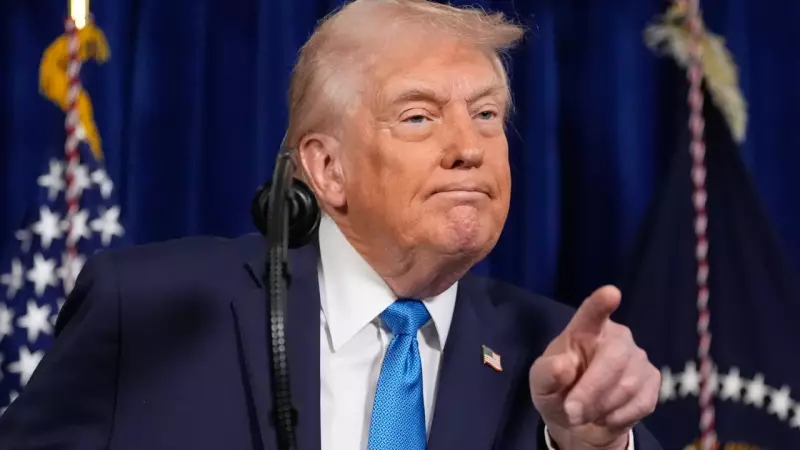
This act of defiance came hours after President Trump, in a press conference, laid an unprecedented claim to Venezuela's resources. He candidly stated the US would "run" Venezuela to ensure a transition, virtually appointing Secretary of State Marco Rubio as a viceregal figure. Trump expressed confidence in controlling the country's vast oil industry, home to the world's largest reserves, a stark departure from his long-held critiques of foreign nation-building.

The 'Donroe Doctrine' and a Stunning Political Reversal
In remarks that stunned observers, President Trump embraced a new foreign policy moniker. He referenced the historic Monroe Doctrine of 1823, which asserted US hegemony in the Americas, but claimed to have superseded it. "They now call it the Donroe Document," a bleary-eyed Trump boasted, having stayed up to monitor the operations. This interventionist turn has led analysts and lawmakers to question the core of Trump's "America First" doctrine.
The move has triggered a firestorm of criticism within the United States. Senator Ed Markey, a liberal Democrat, blasted the operation as "unconstitutional and reckless," lacking congressional approval and driven more by oil interests than national security. Progressive lawmaker Pramila Jayapal called Trump a "rogue leader," while Congresswoman Rashida Tlaib accused him of actions befitting a "rogue state."
Critics point to a glaring contradiction: just weeks before the Venezuela action, Trump issued a full pardon for former Honduran President Juan Orlando Hernández, convicted in US courts for drug trafficking, undermining the stated narco-terrorism charges against Maduro.
A Quagmire in the Making?
Despite a blistering social media campaign by Trump surrogates showing celebrating Venezuelans, the path forward appears fraught. Analysts are deeply skeptical that the US can successfully install a puppet government in Caracas. Without broad legitimacy, Congressional backing, or support from Venezuela's own military, the effort is expected to meet deep and sustained resistance. Many senior Venezuelan officers remain outwardly loyal to Maduro, complicating hopes for a stable transition.
This venture into overt regime change, without United Nations authorisation or broad international support, marks a profound reversal for a president whose first campaign was defined by vows to end foreign quagmires. From threatening Iran and actions in Nigeria to the floated idea of invading Greenland, Trump's foreign policy has taken a sharply aggressive turn, leaving allies and adversaries alike perplexed about America's next move and the true meaning of the self-proclaimed "Donroe Doctrine."