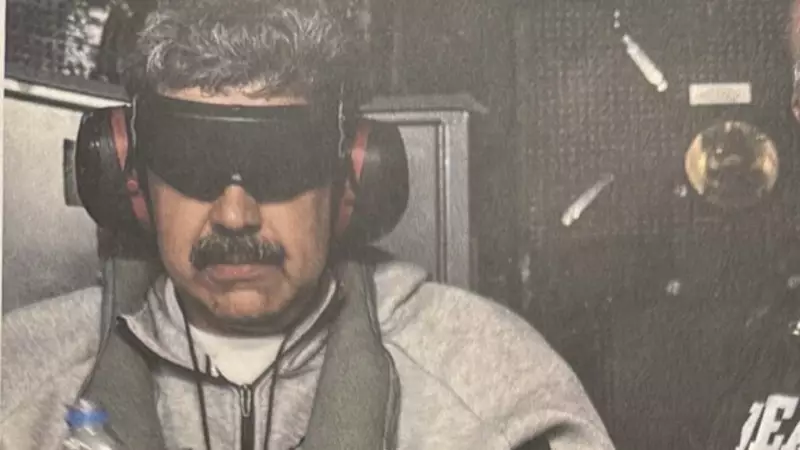
In a move that has sent shockwaves through the international community, US President Donald Trump's announcement of an "extraordinary military operation" in Venezuela on Saturday, January 5, 2026, is being seen as a watershed moment. The operation, which saw US forces swiftly seize Venezuelan President Nicolas Maduro and fly him to the US for trial, has drawn stark comparisons to Russia's invasion of Ukraine and raised alarms about a new era of great-power aggression.
Eerie Parallels to Global Aggression
The phrase "extraordinary military operation" immediately recalled Russian President Vladimir Putin's use of "special military operation" to describe the February 2022 invasion of Ukraine. The tactical parallels are striking. Just as Russian forces mounted a rapid thrust toward Kyiv to decapitate Ukraine's leadership, US forces moved with similar speed against Caracas. Both targeted nations are also resource-rich: Trump has stated American oil companies will assume control of Venezuela's oil infrastructure, mirroring Putin's readiness to exploit critical minerals in Russian-occupied eastern Ukraine.
These actions represent unilateral acts of aggression in brazen defiance of international law and post-War precedents. The reactions from Moscow and Beijing, however, have been layered with hypocrisy. Russia called the US strike "an act of armed aggression," even as its own missiles killed civilians in Kharkiv. China condemned "the use of force by the US against a sovereign country" in the same week it fired rockets toward Taiwan and deployed warships near the island.

A Blueprint for Power Politics
By flouting established rules, the US operation has effectively handed Russia and China a ready-made blueprint. Both nations can now project themselves as defenders of sovereignty while justifying their own illegal acts. China, which claims Taiwan as its province and asserts dominance over the South China Sea, could replicate a "shock-and-awe" operation against Taipei. The US, having acted first in Venezuela, has surrendered the moral high ground to rally the world in Taiwan's defence.
The People's Liberation Army could employ such tactics not only against Taiwan but also against other countries where it perceives hostile leadership, aiming to consolidate its sphere of influence. Trump's own rhetoric and policies accelerate this shift. He has openly invoked a "Donroe Doctrine," a twist on the Monroe Doctrine, suggesting acceptance of other powers' spheres. His administration's new National Security Strategy prioritizes the Western Hemisphere and a military posture to secure it.
The Dawn of a Force-Based World Order
The implications are global and grim. Trump has talked of Greenland as essential to US security, threatened Mexico and Cuba, and suggested military action against Colombia. Any realistic peace plan for Ukraine now likely concedes Donbas to Russia. Simultaneously, China escalates war games across the Taiwan Strait.
The degeneration from a rules-based world to one defined by competing spheres of influence, backed by raw force, is rapidly picking up pace. In the world shaped by Trump's actions, ultimate authority lies not with international law or norms, but with power and the willingness to abuse it. This precedent, set in Venezuela, clears the path for autocrats and expansionist powers to act at will, marking a perilous turn in global affairs.