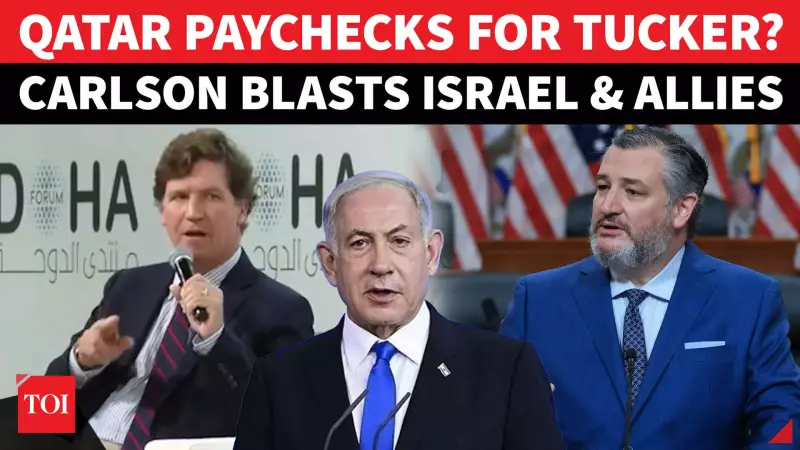
In a fiery exchange that has ignited a new controversy within American conservative circles, prominent commentator Tucker Carlson has vehemently clashed with Republican Senator Ted Cruz. The confrontation, which occurred recently, centered on explosive allegations regarding foreign influence and the framing of the Israel-Hamas conflict.
The Core of the Controversy: Qatar Funding Allegations
The dispute erupted after Senator Ted Cruz publicly accused Tucker Carlson of accepting financial support from the Gulf nation of Qatar. Cruz alleged that this funding was intended to promote a narrative that is sympathetic to Hamas and the Muslim Brotherhood. It is crucial to note that both these groups are officially designated as terrorist organisations by the United States government.
Cruz's accusation suggests that Carlson's commentary, which has often been critical of Israel and its American allies, is not merely opinion but potentially influenced by Qatari interests. This struck at the heart of journalistic integrity and political allegiance, prompting an immediate and fierce rebuttal.

Carlson's Furious Retort: "Who Are You To Question Me?"
Tucker Carlson, known for his provocative style, did not hold back in his response. He launched a sharp counterattack, not only denying the allegations but also lashing out at Israel and its supporters in the U.S. political establishment. His retort, encapsulated in the pointed question "Who are you to question me?", was directed squarely at Senator Cruz.
This public spat highlights a significant and growing rift on the American right regarding foreign policy, particularly the U.S.'s unwavering support for Israel. Carlson's position represents an increasingly vocal faction that questions traditional alliances and is skeptical of overseas military and financial commitments.
Broader Implications and the Political Fallout
The clash between Carlson and Cruz is more than a personal feud; it is a symptom of deeper ideological battles. The allegations bring the role of foreign state influence in American media discourse into sharp focus. Qatar, a key U.S. ally in the Middle East with complex regional ties, has often been at the center of such debates.
Furthermore, the incident underscores how the Israel-Hamas war continues to create unexpected political divisions far beyond the Middle East, splitting traditional coalitions and forcing politicians and commentators to take stark, public stands. The fact that this argument played out publicly, with a call to "Watch" the footage, ensures it will fuel discussions on media bias, foreign lobbying, and the limits of political criticism for days to come.
As the dust settles, the key questions remain: How will this affect the conservative movement's unity? And what impact will such high-profile accusations have on public trust in media narratives concerning complex international conflicts? The confrontation, dated December 08, 2025, marks a significant flashpoint in this ongoing debate.