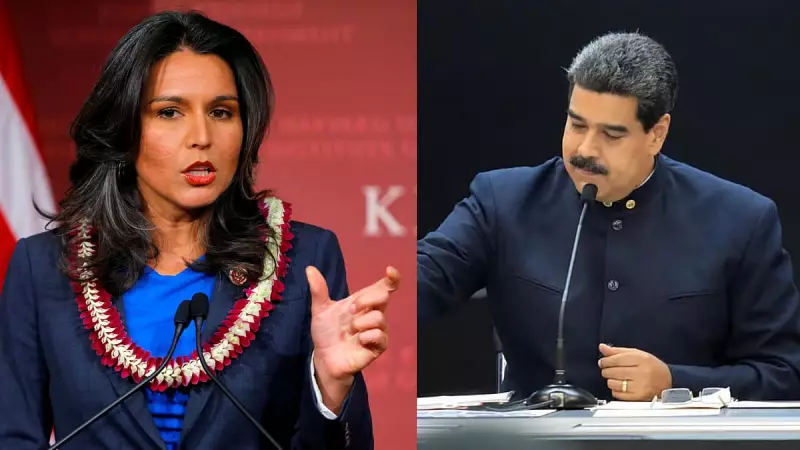
In a significant political development, officials from the former Trump administration deliberately excluded Congresswoman Tulsi Gabbard from months of strategic planning aimed at ousting Venezuelan President Nicolas Maduro. The revelation highlights internal divisions over US foreign policy, particularly regarding military interventions.
A Vocal Critic Sidelined
The planning, which took place over several months, focused on a potential operation to remove the Venezuelan leader. Tulsi Gabbard, a 44-year-old Iraq War veteran and a Major in the Army Reserve, was notably absent from these discussions. Gabbard has built a political reputation as a staunch opponent of what she terms "enduring regime-change wars" initiated by the United States.
Her opposition is not new; it has been a cornerstone of her political platform, extending into her current role. The decision to exclude her from the Venezuela planning sessions appears to be a direct result of her well-known dissenting views on such foreign interventions. This move effectively silenced a critical voice within the broader national security conversation.

The Context of Operation Absolute Resolve
The backdrop to this exclusion is the publicly announced "Operation Absolute Resolve." The White House officially referenced this operation in a social media post dated January 3, 2026. The tweet, which included a related image, signaled a firm stance on the Venezuela situation but offered limited operational details.
The news regarding Gabbard's exclusion was reported by Bloomberg and published on January 9, 2026, at 04:38 IST. It sheds light on the behind-the-scenes dynamics within US political and military circles, where debates over interventionist policies remain fiercely contested.
Implications and Political Divides
This incident underscores a deeper ideological rift in American foreign policy. On one side are proponents of a more assertive, interventionist approach to nations like Venezuela. On the other are figures like Gabbard, who argue that such wars are costly, counterproductive, and inflict long-term suffering on civilian populations.
By sidelining Gabbard, the planners ensured a more homogenous, hawkish discussion free from her persistent anti-war critiques. This has raised questions about the inclusivity of national security planning and whether dissenting opinions are being systematically marginalized in critical decision-making processes that could lead to military conflict.
The story is more than an internal administrative snub; it reflects the ongoing struggle to define America's role on the global stage. For observers in India and worldwide, it serves as a case study in how domestic political disagreements directly shape international strategy and potential conflict.