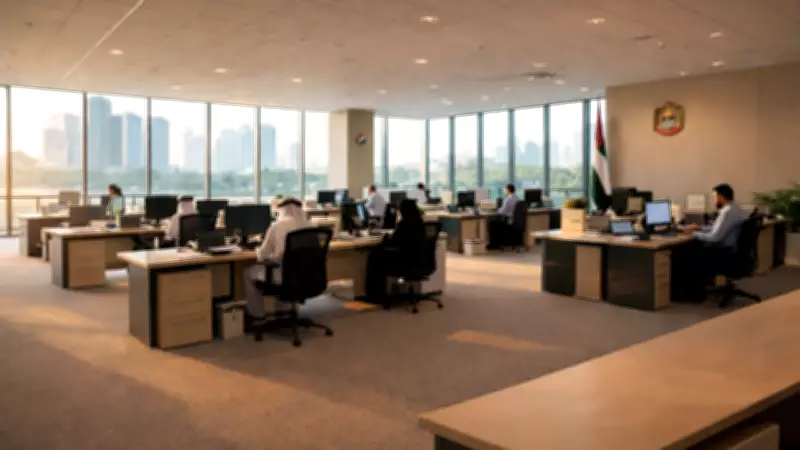
UAE Implements Reduced Working Hours Across Sectors for Ramadan
The United Arab Emirates has formally announced significant reductions in working hours for employees in both the public and private sectors throughout the sacred month of Ramadan. This annual adjustment is designed to accommodate the spiritual observances and fasting practices associated with this holy period while maintaining essential government services and business operations.
Federal Government Working Hours and Flexibility
The Federal Authority for Government Human Resources has confirmed the official Ramadan schedule for all ministries and federal entities. From Monday through Thursday, standard working hours will be from 9:00 a.m. until 2:30 p.m. On Fridays, the workday will be shortened further, running from 9:00 a.m. until noon only.
This standardized schedule applies uniformly across all federal ministries and government bodies, with exceptions granted only for employees whose specific job duties necessitate alternative arrangements due to operational requirements.

In an official statement published on its website, the authority emphasized that previously approved flexible working regulations may continue to be implemented during Ramadan, provided that all employees complete the mandated daily working hours. The statement further clarified that federal entities now have the discretion to permit employees to work remotely on Fridays, though with important restrictions.
Remote work on Fridays must not exceed seventy percent of the total workforce within any given federal entity, and all remote work arrangements must strictly comply with established regulations and operational controls to ensure continuity of government services.
Private Sector Adjustments and Overtime Provisions
For the private sector, the Ministry of Human Resources and Emiratisation has announced that daily working hours will be reduced by two hours throughout the entire month of Ramadan. This represents a meaningful adjustment, as UAE employees typically work between eight and nine hours per day under normal circumstances.
The ministry has stated that private sector companies may implement flexible work arrangements or remote working options, provided these arrangements remain within the framework of the reduced daily working hours. Any such flexibility must align with both the company's legitimate business interests and the specific nature of its operations.
Importantly, any hours worked beyond the reduced Ramadan schedule will be classified as overtime. Employees will be entitled to receive additional compensation for these overtime hours in accordance with UAE labor regulations and standards.
Cross-Sector Flexibility and Operational Continuity
Across both public and private sectors, UAE authorities have carefully structured these adjustments to provide reasonable flexibility while ensuring that essential operations continue without disruption. Federal entities may continue applying their approved flexible work systems during regular working days in Ramadan, in addition to the Friday remote work option with its seventy percent participation cap.
Similarly, private sector companies are permitted to introduce flexible schedules or remote work arrangements, as long as these remain within the reduced daily working hour framework established for Ramadan. The revised timing structures are specifically designed to respect the spiritual and social rhythms of Ramadan while simultaneously maintaining the continuity of government services and commercial activities throughout the UAE.
These coordinated measures reflect the UAE's commitment to balancing religious observance with economic productivity, creating an environment that supports both spiritual practices and professional responsibilities during this significant holy month.