US Air Force Sergeant's Viral NATO Rant Criticizes US Foreign Policy and Leadership
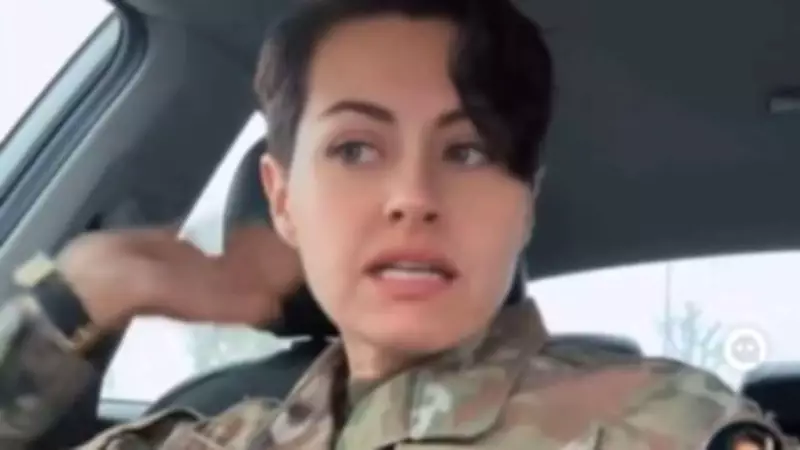
An active-duty US Air Force sergeant, identified as Technical Sergeant Melissa Mece, has sparked widespread controversy after a video of her giving a geopolitical opinion went viral. Stationed with NATO in Italy, Mece was recorded discussing US relationships with other countries, during which she referred to her commander-in-chief as 'the Cheeto'. The video emerged amid heightened tensions following US and Israeli strikes on Iran, drawing attention from political activists and officials.
Video Surfaces Amid Middle East Conflict and Political Backlash
The video gained traction as MAGA activists tagged Secretary of War Pete Hegseth, urging him to review the footage and take disciplinary action against Mece. Laura Loomer, an aide to former President Donald Trump, confirmed that the relevant department had already seen the video. This incident comes at a sensitive time, with reports of Israel attacking Iran, Iran launching missile strikes at a US airbase in Bahrain, and Israel bombing Beirut, highlighting the volatile US-Israel-Iran dynamic.
Satellite images have shown the aftermath of strikes on Iranian sites, including Khamenei's compound and nuclear complexes, while the US military's Operation Epic Fury has reportedly cost $700 million in just 24 hours, with final war expenses remaining uncertain. Against this backdrop, Mece's comments have intensified debates about military conduct and free speech.

Mece's NATO Explanation and Critique of US Foreign Policy
In the video, Mece explained NATO's origins post-World War II, emphasizing its goal to prevent similar global conflicts. "A lot of countries didn't join World War II right away. They were like not my country, not my problem until eventually it spilled over, became everybody's problem," she said. "So long story short, we are not going to do that again. If you fight with one of us, you fight with all of us because we can't allow someone that amount of power in that amount of damage around the world."
She highlighted NATO's expansion, noting that countries like Sweden, which historically avoided wars, have joined. Mece argued that America is not self-sustaining and depends on international alliances, warning against 'burning bridges'. She criticized US actions, such as potential moves against Venezuela, stating that taking over Venezuela violates international laws and portrays America as 'a rich brat who wants whatever they want whenever they want'.
Military Community Reacts with Strong Criticism
The response from the military community has been sharply critical. A US Coast Guard veteran commented, "What makes this grave is not the words alone, but the rank. A Technical Sergeant is entrusted to lead, mentor, and uphold standards not to weaponize the uniform for personal grievance. This is not dissent; it is dereliction. It erodes the trust that binds our forces together and signals to adversaries that our discipline is fraying."
Others questioned the permissibility of such actions, with one person writing, "Why are active members of the US military allowed to record videos giving opinions on anything related to national defense or policy?" These reactions underscore concerns about discipline and the appropriate boundaries for military personnel in expressing political views.
Broader Implications for US Military and International Relations
This incident raises significant questions about the role of US military personnel in public discourse, especially during times of international conflict. As the US navigates complex relationships in the Middle East and beyond, with ongoing operations and uncertain costs, maintaining unity and professionalism within the ranks is crucial. The viral nature of Mece's video highlights how social media can amplify individual actions, potentially impacting military morale and public perception.
The situation continues to develop, with potential disciplinary actions and further discussions on military protocols expected. It serves as a reminder of the delicate balance between personal expression and institutional responsibilities in the armed forces.