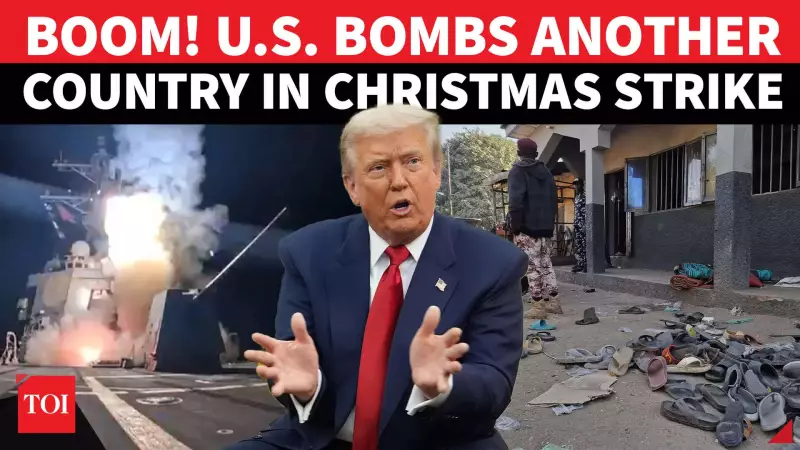
In a dramatic Christmas season move, the United States military has executed airstrikes against Islamic State (ISIS) targets in Nigeria. The operation was ordered directly by US President Donald Trump, marking a significant and sudden escalation of American military involvement in West Africa.
The Presidential Order and Justification
President Donald Trump announced the military action via a post on his Truth Social platform. He stated that the decision was a direct response to ISIS militants carrying out targeted killings of innocent Christians in the region. This strike comes just days after American forces targeted ISIS positions in Syria, indicating a concerted campaign against the terrorist group's affiliates.
The President's move did not come without warning. Back in October, Trump had publicly cautioned that Christianity faced what he termed an "existential threat" within Nigeria. He had threatened military intervention at that time, criticising the West African nation's government for its perceived failure to protect Christian communities from violent attacks.

Timing and Strategic Implications
The airstrikes were conducted on December 26, 2025, as confirmed by the announcement. The timing, during the Christmas holiday period, underscores the urgency conveyed by the Trump administration regarding the threat to Christian populations. This action represents a clear shift from diplomatic pressure to direct military engagement in Nigeria.
This development places Nigeria firmly on the map of active US counter-terrorism operations, alongside countries like Syria and Iraq. It raises immediate questions about the scope and duration of this new front, as well as the level of coordination, if any, with the Nigerian government.
Regional and Global Repercussions
The surprise military intervention is likely to have profound consequences for the volatile security situation in West Africa's Sahel region. Analysts are watching closely to see how this affects the dynamics of militant groups operating in Nigeria and neighbouring countries.
Furthermore, this decision by President Trump sets a powerful precedent for future US foreign policy actions based on the protection of religious minorities abroad. It signals a willingness to use military force unilaterally in response to internal conflicts within sovereign nations when aligned with specific policy objectives.
The global community, particularly regional bodies like the African Union, is now faced with responding to this unexpected entry of US firepower into the continent's complex security landscape. The long-term fallout for US-Nigeria relations and regional stability remains to be seen.