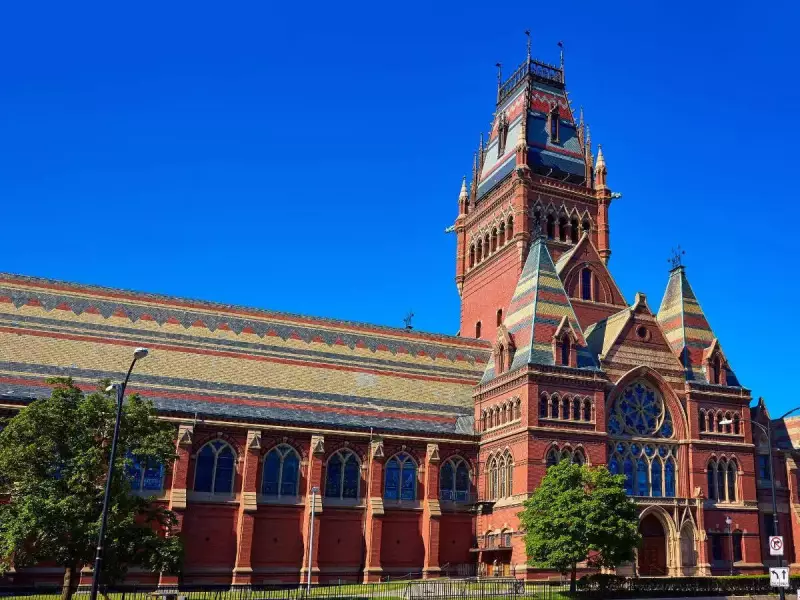
The legal confrontation between Harvard University and the United States federal government has escalated, with the Trump administration formally challenging a court order to return nearly $2.7 billion in frozen research funds. This appeal, filed in the United States District Court for the District of Massachusetts, marks a critical new phase in a dispute that tests the limits of government oversight in academic institutions.
The Genesis of the Funding Dispute
This high-stakes conflict began in April 2025 when Harvard initiated a lawsuit. The university argued that the federal government's decision to halt billions in research funding was a punitive measure. Harvard claimed it was being targeted for resisting federal attempts to exert control over key internal processes, including faculty hiring and admissions policies.
The administration, led by former President Donald Trump, defended the freeze by citing concerns about antisemitism on Harvard's campus. However, in a significant ruling in September, District Judge Allison D. Burroughs rejected this justification. She determined the action was retaliatory and violated constitutional protections, describing it as an ideologically motivated attack on the university.

Following Judge Burroughs's decision, Harvard started to see its funding restored. By late September, approximately $46 million had flowed back to the university across nearly 200 individual grants. This provided crucial relief for ongoing research projects that had been stalled for four months.
Legal Pathways and Expert Analysis
The Department of Justice's appeal now challenges the final judgments in two linked cases: one from Harvard itself and another from the university's chapter of the American Association of University Professors. The case will proceed to the U.S. Court of Appeals for the First Circuit, which will establish a schedule for legal briefs and arguments.
Legal observers suggest the government faces a steep challenge. Samuel R. Bagenstos, former general counsel for the Department of Health and Human Services, characterized the district court's ruling as "careful and well-reasoned." He expressed doubt that the appellate court would overturn it, noting the First Circuit's history of reinforcing limits on federal funding cuts, especially when proper administrative steps are bypassed.
Potential for a Supreme Court Showdown
Should the First Circuit uphold the lower court's decision, the Trump administration could seek a review by the Supreme Court of the United States. This prospect introduces significant uncertainty. The Court's conservative majority has frequently supported expansive interpretations of executive power, which could influence its stance on disputes involving federal funding and institutional independence.
A ruling from the nation's highest court would establish a powerful nationwide precedent, defining the extent to which the executive branch can leverage funding to control policies at universities that receive federal money.
Broader Implications and Settlement Talks
Parallel to the legal fight, settlement discussions are reportedly underway between Harvard and the federal government. Sources indicate these talks could involve a payment from Harvard of up to $500 million to resolve the dispute and restore the frozen funds. While no final agreement has been reached, any settlement would profoundly impact federal funding practices and reaffirm or redefine university autonomy.
This case highlights the enduring tension between federal authority and academic independence. Its final outcome will not only affect Harvard but will also serve as a critical reference point for universities across the globe, including those in India, that navigate complex relationships with government funders. The decision will shape how institutions manage federal grants and defend their operational sovereignty against political pressures.