A prominent Catholic bishop in the United States has launched a sharp critique against New York City's Mayor over a speech made by a Democratic Socialist lawmaker that praised Hamas. The incident has ignited a fresh controversy surrounding political rhetoric on the ongoing Israel-Hamas conflict.
Bishop Barron's Strong Condemnation
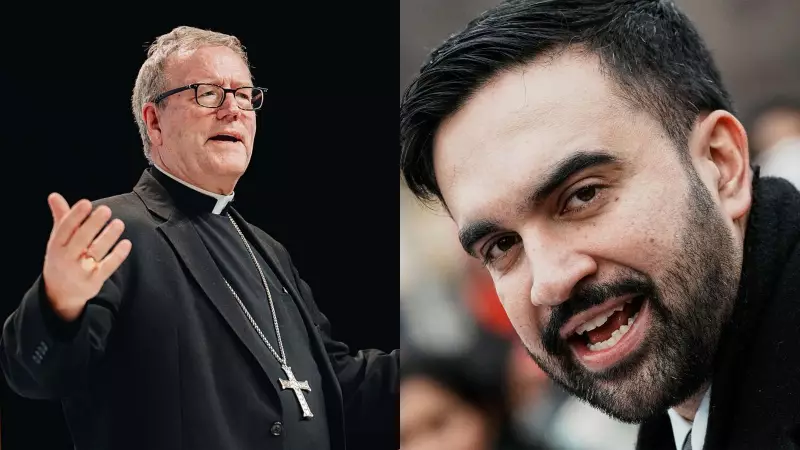
Bishop Robert Barron, who leads the Diocese of Winona-Rochester in Minnesota and chairs the US Conference of Catholic Bishops' Committee on Laity, Marriage, Family Life and Youth, expressed his dismay publicly. He described a recent speech given by New York State Assemblyman Zohran Kwame Mamdani as "shocking." The speech was delivered at New York City's Jacob Javits Center during an event hosted by the People's Forum.
The core of Barron's criticism centered on Mamdani's characterisation of Hamas. The bishop stated that the lawmaker referred to the group, which is designated as a terrorist organisation by the United States and several other countries, as "a political and military force that is actually fighting for the freedom of the Palestinian people." Barron found this framing deeply troubling, especially in the wake of the October 7 attacks.

The Contentious Speech and Political Backdrop
The event where Mamdani spoke was organised by the People's Forum, a group known for its leftist advocacy. The assemblyman, who represents parts of Queens, is a member of the Democratic Socialists of America (DSA). His speech was part of a larger program that also included a message from New York City Mayor Eric Adams, delivered via video.
Mayor Eric Adams' involvement became a focal point of the backlash. While the Mayor did not deliver the controversial remarks himself, his recorded message played at the same event linked his office to the proceedings. Bishop Barron directly questioned Mayor Adams, asking on social media platform X, "Mayor Adams, do you agree with this characterisation of Hamas?" This public challenge amplified the story beyond local New York politics, drawing national attention.
Reactions and Wider Implications
The bishop's comments have added a significant religious voice to the ongoing debate over the boundaries of political speech concerning the Middle East conflict. Barron emphasised the violent actions taken by Hamas on October 7, 2023, which triggered the current war in Gaza. By praising a group responsible for such acts, the speech, in his view, crossed a moral line.
This incident underscores the delicate and often volatile intersection of international politics, local governance, and public discourse in multicultural cities like New York. The controversy forces a recurring question: how should political leaders navigate events or affiliations with groups that express views considered extreme or offensive by large segments of the population?
As of now, there has been no detailed public response from Mayor Eric Adams's office specifically addressing Bishop Barron's criticism or clarifying his stance on Mamdani's comments. The silence from City Hall leaves the issue open, potentially affecting the Mayor's standing with various constituencies, including the city's large Jewish community and its Catholic population.
The fallout serves as a reminder that in the age of instant communication and social media, associations are quickly made, and public figures are increasingly held accountable for the company they keep and the platforms they indirectly endorse.