

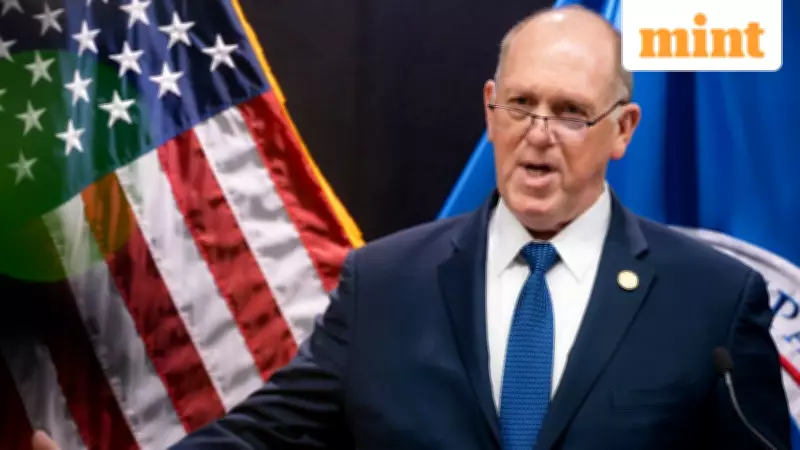
In a significant policy shift, US border czar Tom Homan announced on Thursday that federal immigration agents operating in Minneapolis will transition to more targeted operations, stepping back from the sweeping street enforcement tactics that have ignited widespread public outrage and sustained protests across the city.
Targeted Approach Replaces Controversial Street Sweeps
Speaking at a press conference, Homan revealed that Immigration and Customs Enforcement (ICE) agents will now focus primarily on immigrants with criminal records and those posing national security risks. This marks a substantial departure from earlier methods that included random street stops and visible enforcement actions that many community members found intimidating and disruptive.
"We can do better," Homan acknowledged, marking the first time a senior administration official has conceded that the operation had fallen short of expectations. "We made some significant gains, significant coordination and cooperation, and you're going to see some massive changes occurring here in this city."

Potential Force Reduction with Local Cooperation
Homan indicated that the approximately 3,000 federal agents currently deployed to Minneapolis could be scaled back if state and local leaders cooperate with the new enforcement approach. He described recent meetings with Minnesota Governor Tim Walz and Minneapolis Mayor Jacob Frey as productive, despite both officials having been outspoken critics of the initial enforcement surge.
"We're not surrendering our mission at all, we're just doing it smarter," Homan emphasized during his announcement.
The border czar also called for expanded ICE access to Minnesota jails to detain targeted immigrants upon their release, arguing this approach would significantly reduce the need for what he described as "dangerous" street operations that have proven controversial and potentially hazardous.
Internal Guidance Directs Agents to Avoid 'Agitators'
According to documents reviewed by Reuters, internal guidance issued by a senior Immigration and Customs Enforcement official directs agents to limit engagement with "agitators" to avoid further inflaming community tensions. The directive specifically instructs officers to prioritize immigrants with criminal charges or convictions, reinforcing the shift away from broad, visible street sweeps that characterized earlier enforcement methods.
Political Tensions Intensify Following Omar Incident
The Justice Department has separately charged Anthony Kazmierczak with assaulting or intimidating a U.S. official after he allegedly sprayed apple cider vinegar on Democratic Representative Ilhan Omar during a Tuesday town hall event. Representative Omar blamed President Donald Trump's rhetoric for the attack, while Trump dismissed the incident and suggested without evidence that it might have been staged.
Kazmierczak, identified as a Trump supporter through social media records, has two prior drunk-driving convictions. It remains unclear whether he has obtained legal representation for the current charges.
Fatal Shootings Deepen Public Anger and Distrust
Minneapolis has experienced sustained protests since two fatal shootings involving federal agents occurred in recent weeks. Renee Good, a 37-year-old mother of three, was shot dead by an ICE agent on January 7. Public anger escalated further when Alex Pretti, a 37-year-old intensive care nurse, was killed by federal agents on Saturday.
Trump administration officials initially described both victims as "domestic terrorists," claims that have been contradicted by multiple videos reviewed by Reuters that show different circumstances surrounding the incidents.
'Seasoned Agent' Involved in Fatal Shooting
Union officials revealed that the Border Patrol agent involved in Pretti's killing was an experienced officer. "This wasn't a rookie agent that was out there, this was a seasoned agent," said Paul Perez, president of the National Border Patrol Council, citing approximately eight years of service and extensive firearms and crowd-control training.
Authorities have not released the names of the masked agents involved in either shooting or provided detailed background information about their service records and training.

Earlier Confrontation Raises Additional Questions
Verified video footage shows that Alex Pretti had a confrontation with federal agents eleven days before his death, during which he shouted, spat, and damaged a vehicle before being subdued and released. During this earlier encounter, a firearm was visible in his waistband.
Footage of Saturday's shooting shows an agent removing a gun from Pretti's waistband after he was restrained on the ground. Seconds later, another officer fired the first shot into Pretti's back. Pretti was legally licensed to carry a concealed weapon at the time of the incident.
The combination of these fatal shootings, the controversial enforcement tactics, and the political tensions surrounding immigration policy have created a complex and volatile situation in Minneapolis that the new targeted approach aims to address while maintaining enforcement priorities.





