In a stunning escalation of geopolitical tensions, former US President Donald Trump has declared his intention to oversee Venezuela's affairs following the dramatic capture of the country's leader, Nicolás Maduro. The events, which unfolded on Saturday, mark a pivotal moment in the long-standing conflict between Washington and Caracas.
The Dramatic Capture and a New Power Equation
On Saturday, January 8, 2026, US forces successfully apprehended Venezuelan President Nicolás Maduro and his wife. They were swiftly transported to New York to face criminal prosecution. This bold move represents the most direct intervention by the United States in Venezuelan politics in decades.
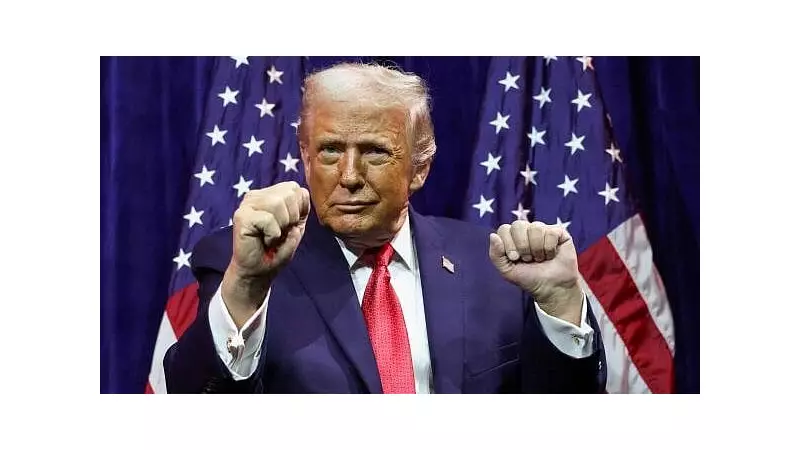
In the aftermath, Donald Trump made a significant statement, revealing that his team would actively "run" Venezuela. This operation, he indicated, would proceed with the cooperation of Delcy Rodríguez, who served as Maduro's vice president and has now assumed the role of the nation's acting leader. This alliance suggests a complex and controversial transfer of administrative power, orchestrated from outside the country's borders.

Trump's Focus: Liberation of Resources, Not People
The underlying motive for this intervention, as framed by Trump's statement, appears to be centered squarely on Venezuela's vast natural wealth, particularly its oil reserves, rather than democratic liberation for its citizens. The phrase "liberate your oil, not your people" encapsulates a stark realpolitik approach, shifting the narrative from one of humanitarian or democratic concern to one of explicit resource control.
This development sends shockwaves through international diplomatic circles. It challenges established norms of sovereignty and non-intervention, setting a precedent for how a major power might engage with a nation rich in resources but led by a government it deems illegitimate. The role of Delcy Rodríguez as the pivotal local figure in this arrangement adds a layer of internal political intrigue to the crisis.
International Repercussions and Future Uncertainty
The immediate consequences are profound. Venezuela, already grappling with severe economic and social crises, now faces an unprecedented form of external administration. The global reaction, particularly from nations like Russia, China, and regional Latin American powers, will be crucial in determining the next phase of this confrontation.
Furthermore, the legal proceedings against Maduro in New York will become a focal point of international law and politics. The move to physically capture a sitting head of state and prosecute him in a foreign court is a rare and aggressive tactic that will be debated for years to come.
For the people of Venezuela, this event plunges their nation's future into deeper uncertainty. The promise of a new management under Trump's guidance, aligned with a faction of the former government, raises critical questions about national autonomy, the distribution of oil wealth, and the ultimate goal of this high-stakes geopolitical maneuver.