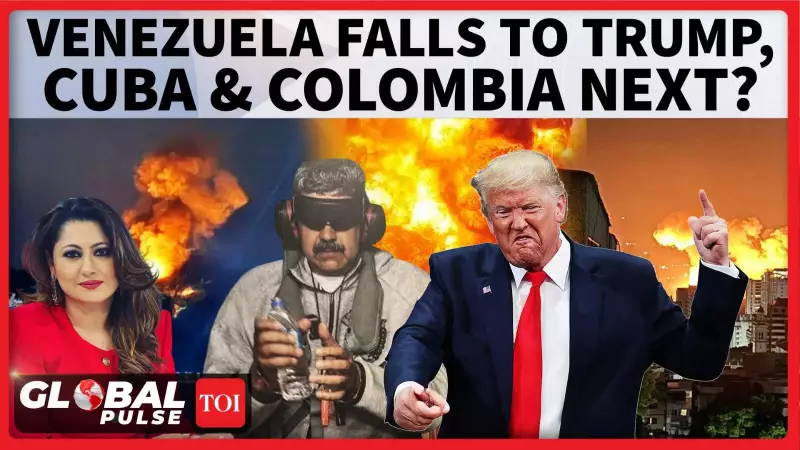
The international community was left reeling on January 6, 2026, following a dramatic and sudden military operation by the United States in Venezuela. The raid led to the capture of the country's President, Nicolás Maduro, who was subsequently transported to the United States to stand trial on federal charges.
A Bold Declaration and a New Interim Government
In the immediate aftermath, US President Donald Trump made a stark declaration, stating that America was now "in charge" of the South American nation. He promised that the US would oversee Venezuela's affairs until stability is restored. Washington swiftly moved to install an interim administration, ensuring it retains significant strategic influence, most notably access to Venezuela's vast oil reserves.
The operation has sent shockwaves far beyond Caracas. President Trump has not limited his focus to Venezuela alone. He has openly issued warnings to other nations, including Colombia, Mexico, Cuba, and even Greenland, suggesting that the US could expand its interventionist policy if their governments fail to align with American demands.

Global Reactions: Justice vs. A Dangerous Precedent
The bold move has sharply divided global opinion. Supporters of the action have framed it as a long-overdue delivery of justice, holding a leader accountable. However, critics across the world are raising alarms, arguing that the unilateral military action severely undermines international law and national sovereignty. They warn it sets a perilous precedent where might makes right, potentially ushering in a more volatile and unpredictable global era.
Fear of a Domino Effect in the Region
Many analysts and diplomats now express deep concern that the world is entering a phase where traditional rules-based order is being sidelined by raw power politics. The explicit threats to neighbouring countries have fuelled anxieties of a potential domino effect in Latin America, where US military and political pressure could topple or force the compliance of other governments. The future of regional autonomy hangs in the balance as nations assess their next moves in the shadow of Washington's demonstrated willingness to act.
The capture of Maduro is not an isolated incident but a potentially transformative event in international relations. It marks a dramatic escalation in US foreign policy under Trump's renewed leadership, with immediate consequences for energy markets, regional security, and the very principles governing interactions between sovereign states. The coming days will reveal whether this is a one-off action or the beginning of a new, more confrontational chapter in hemispheric affairs.