In a stunning display of military precision, the United States captured Venezuelan President Nicolas Maduro and his wife, Cilia Flores, from their fortified Caracas compound on January 3. Codenamed Operation Absolute Resolve, the mission by US special forces swiftly brought the couple to New York City, where they now face serious charges related to a "narco-terrorism conspiracy."
A Pattern of Power Without Formal War
This dramatic action, however, was not taken under the umbrella of a declared war. The last time the United States officially declared war was during World War II. Since then, major conflicts in Vietnam, Afghanistan, and Iraq were not formally declared. This recent capture, along with the June intervention supporting Israel against Iran, highlights America's consistent approach of using immense power without the formalities of war declaration.
This strategy is backed by unparalleled strength. The US economy, valued at $30.62 trillion as of October 2025, is the world's largest. Militarily, its capabilities are unmatched, demonstrated by operations against figures like Osama bin Laden and Qasem Soleimani, and now Maduro. This dominance provides any US President with immense global influence, but its application depends heavily on the occupant of the Oval Office.

The Trump Factor and Legal Grey Areas
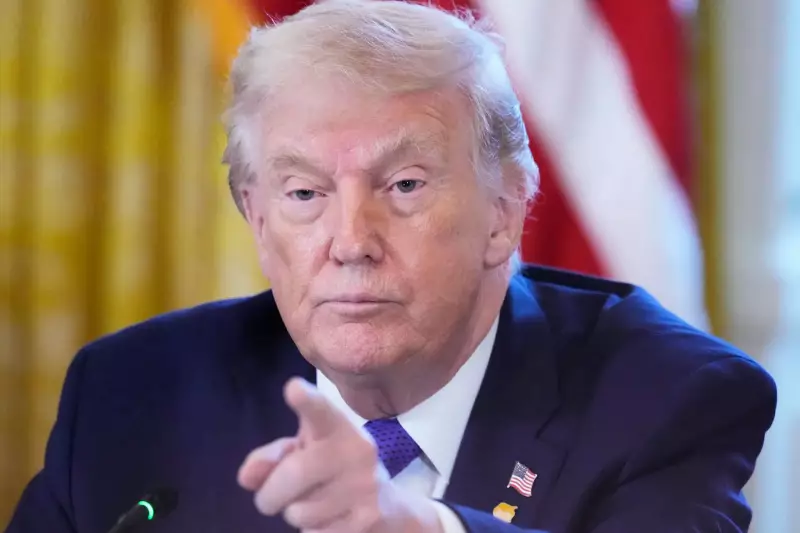
Under the returned President Donald Trump, this power projection has taken a notably aggressive and personal tone. His remarks following the Venezuela operation, including hints about future actions in Colombia and past comments on Greenland, suggest a foreign policy where the open threat of force is central. This contrasts with his claim to be a "president of peace."
The legality of such operations is often debated. For Operation Absolute Resolve, Congress was notified only after the mission began, similar to strikes on Iran. The US Constitution grants Congress the sole power to declare war, a power used only 11 times, last in 1942. Modern administrations, however, frequently cite the President's authority under Article II to act in the national interest, as was argued for the Operation Midnight Hammer strikes on Iranian nuclear facilities.
Economic Warfare and Proxy Conflicts
American power extends beyond the battlefield. The US frequently employs economic sanctions and tariffs as tools of strategic warfare. The Office of Foreign Assets Control (OFAC) administers these punitive measures, while "Trump tariffs" have reshaped trade dynamics.
Furthermore, the US engages in conflicts through proxy support, a prime example being the Russia-Ukraine war. As Ukraine's leading aid supplier, providing over $114.64 billion in assistance by August 2025, the US is deeply involved in what many see as a proxy struggle with Moscow, yet without direct, declared involvement. Ukrainian President Volodymyr Zelenskyy's recent comments were seen as a nod to this close Washington role.
Why Formal Declarations Are Avoided
Experts point to several reasons the US sidesteps formal war declarations. Political scientist Tanisha Fazal argues that modern international laws governing warfare (jus in bello) have raised compliance costs, creating a disincentive to declare. Sarah Kreps adds that modern tactics like drones, special forces, and cyber warfare minimise American casualties, reducing public backlash.
Politically, avoiding a declaration allows Congress to dodge responsibility for authorising potentially unpopular wars, shielding members from electoral costs. It also grants the White House plausible deniability, framing actions as limited operations. Secretary of State Marco Rubio's statement that Maduro's capture "is not a war against Venezuela" exemplifies this, mirroring Russia's labelling of its Ukraine invasion as a "special military operation."

As the US under Trump's second term continues to project power aggressively without formal declarations, it maintains strategic flexibility and global dominance. However, this approach urgently raises profound questions about accountability, legality, and the evolving nature of conflict in the 21st century.